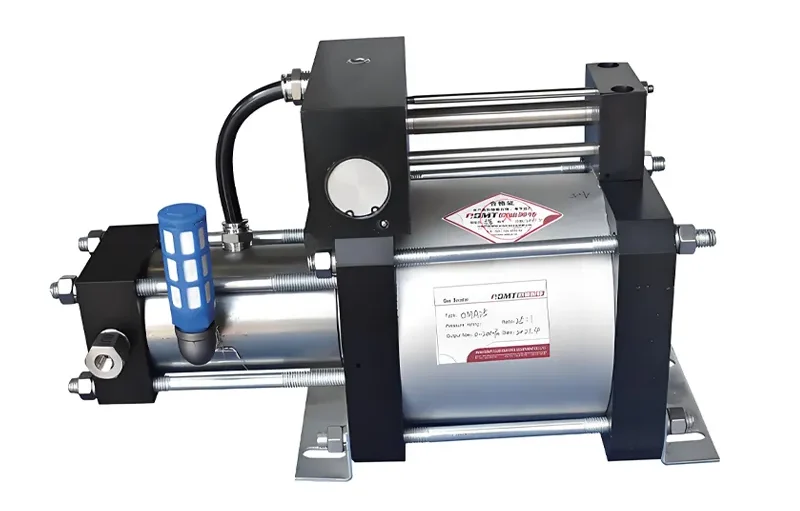
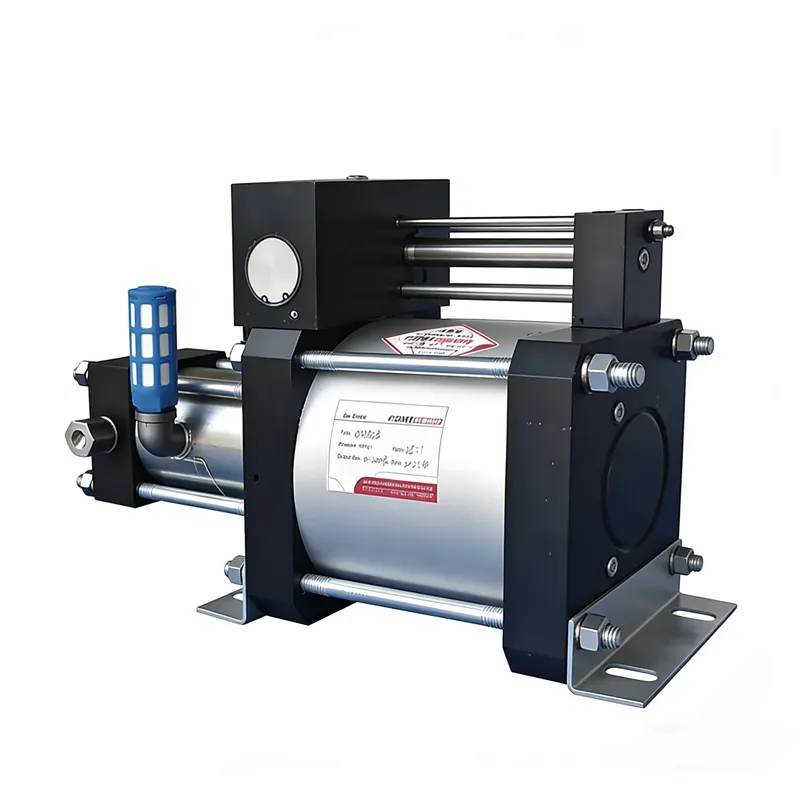
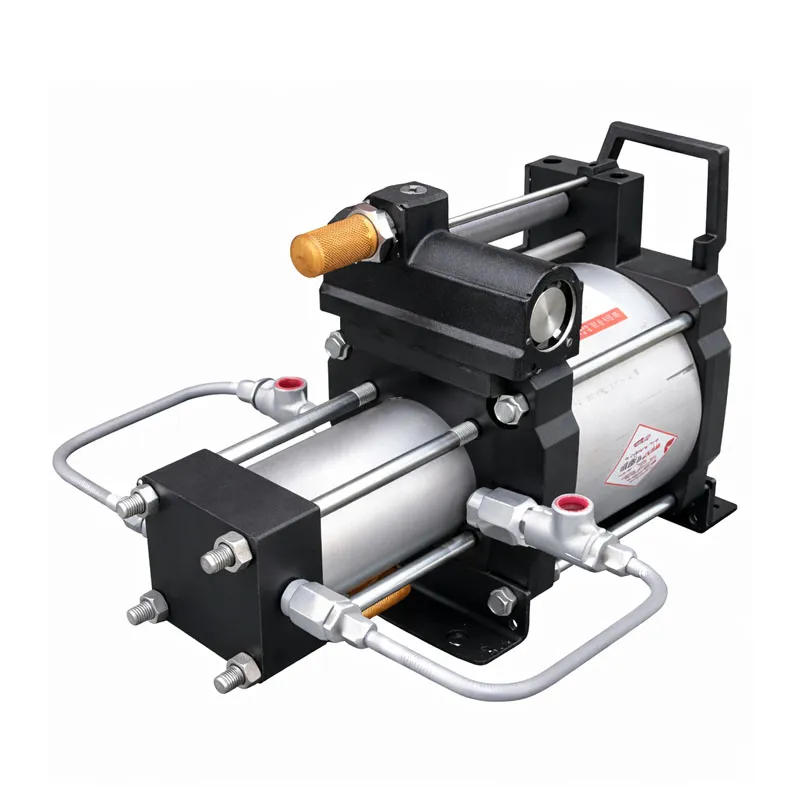
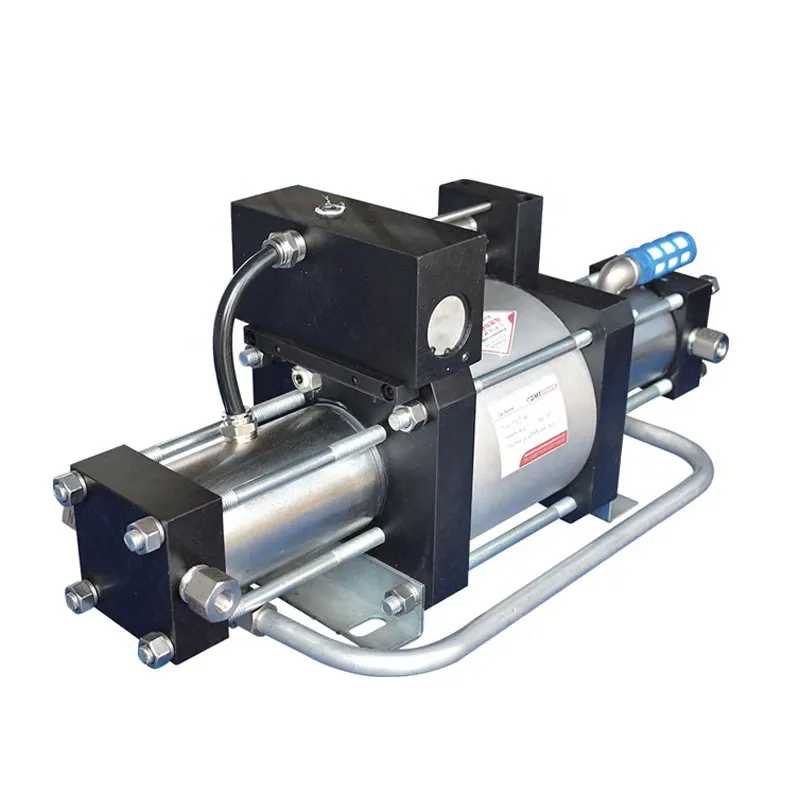
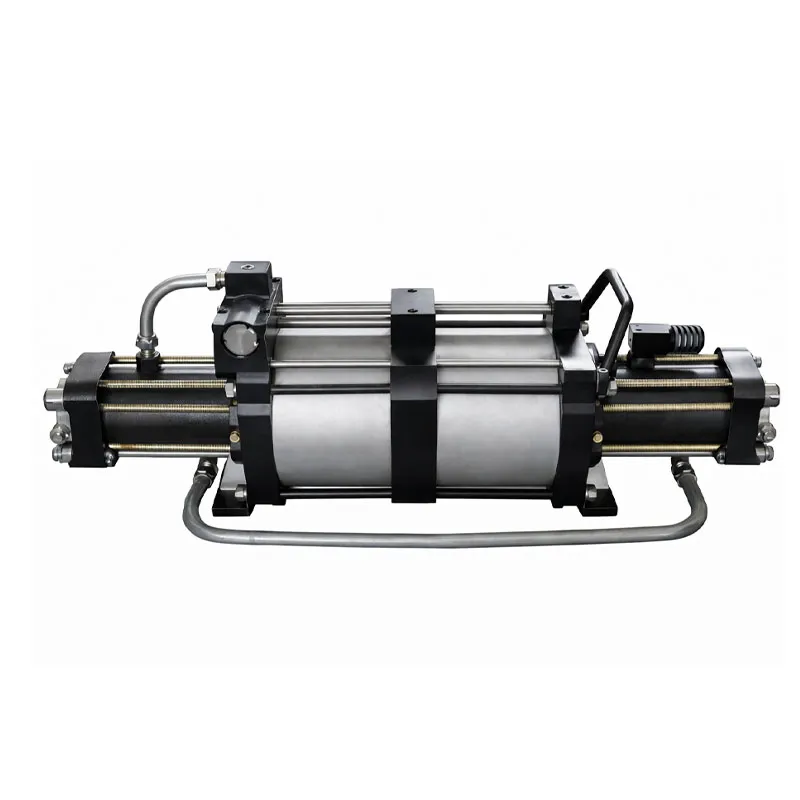
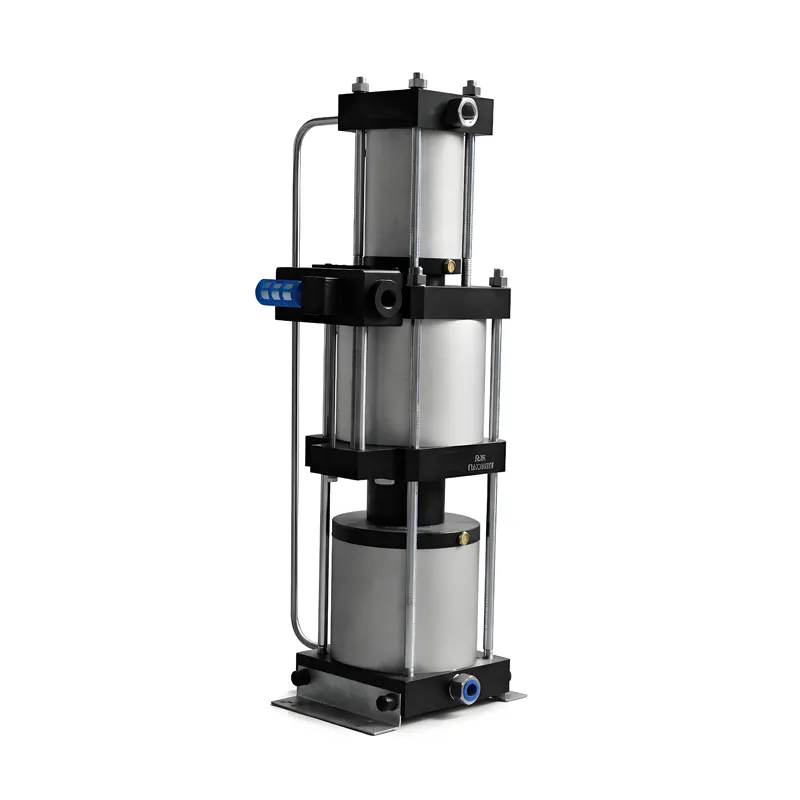
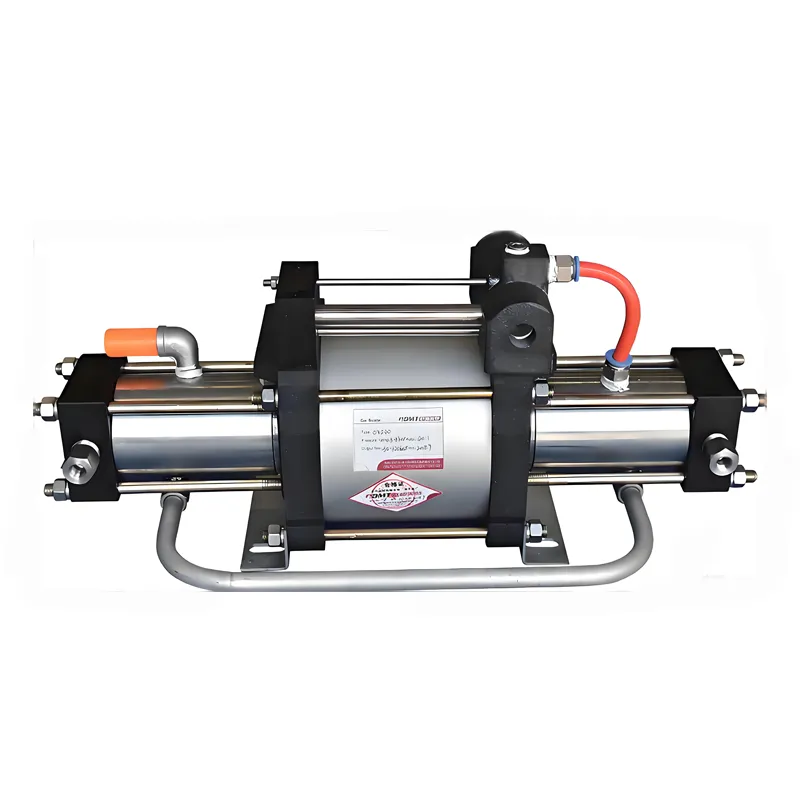
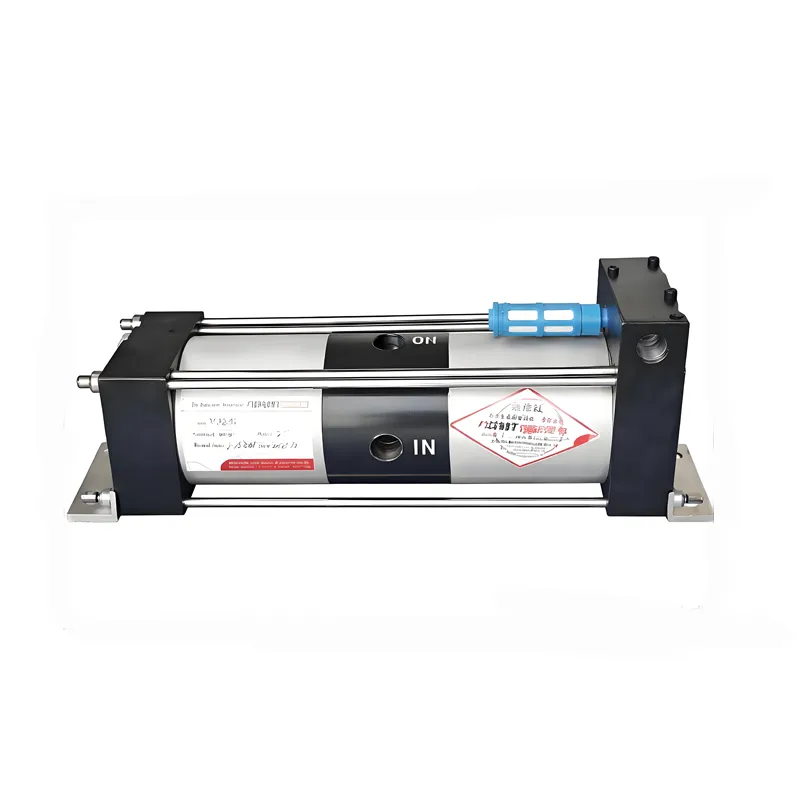
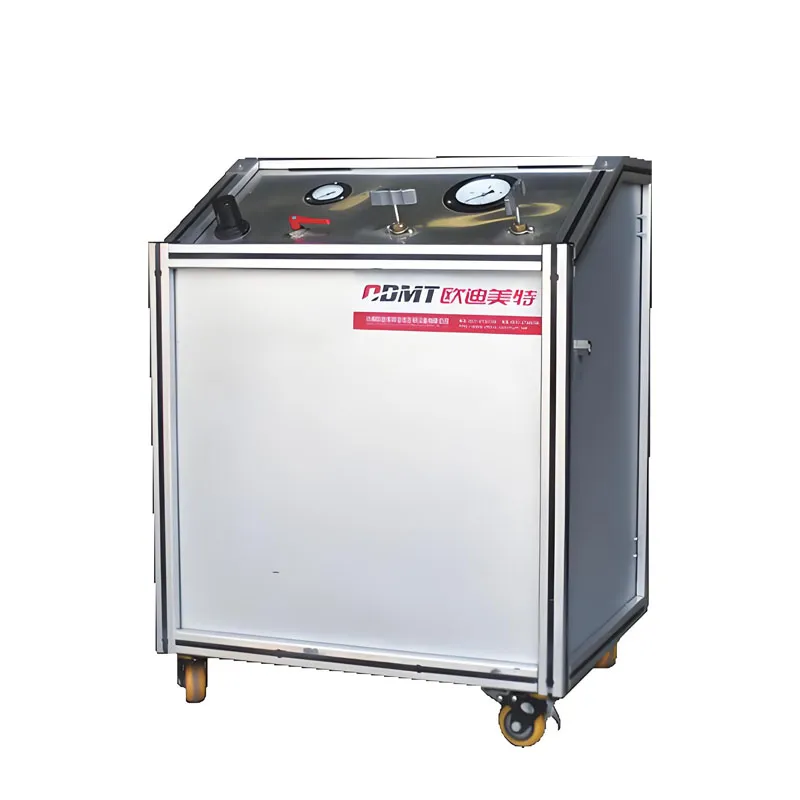
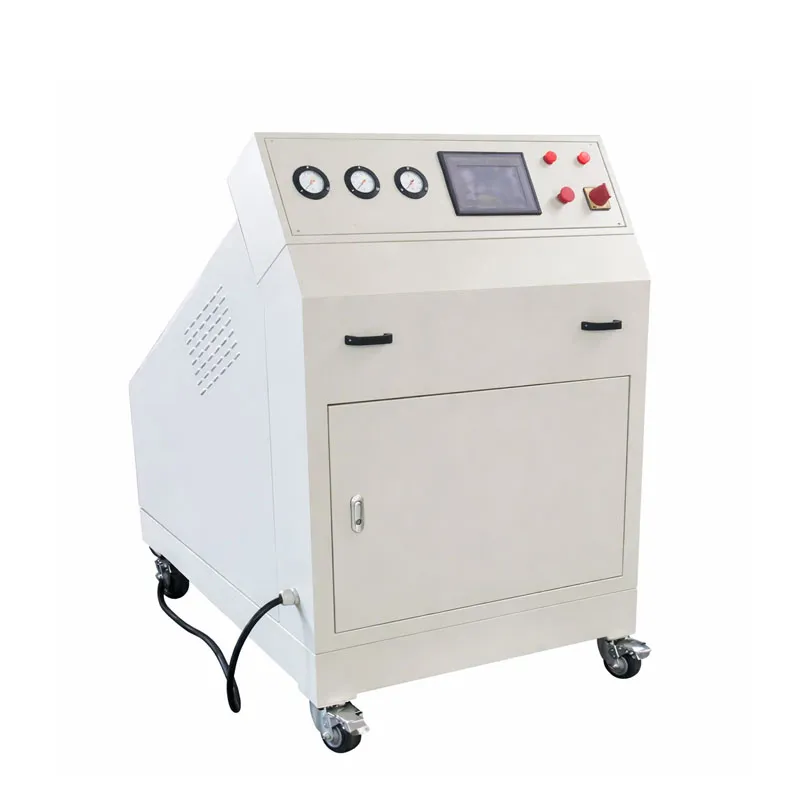
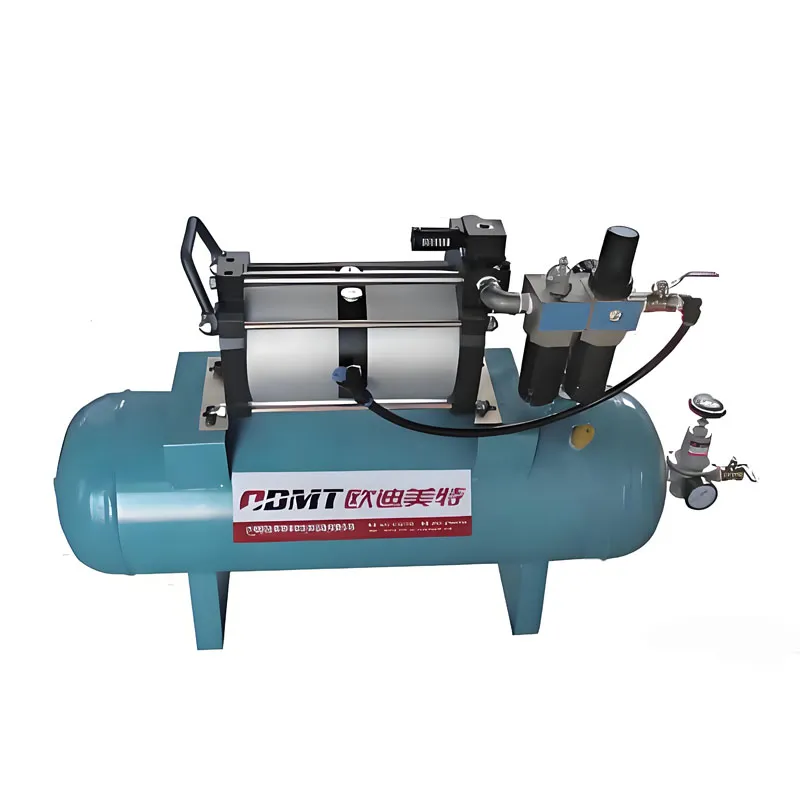
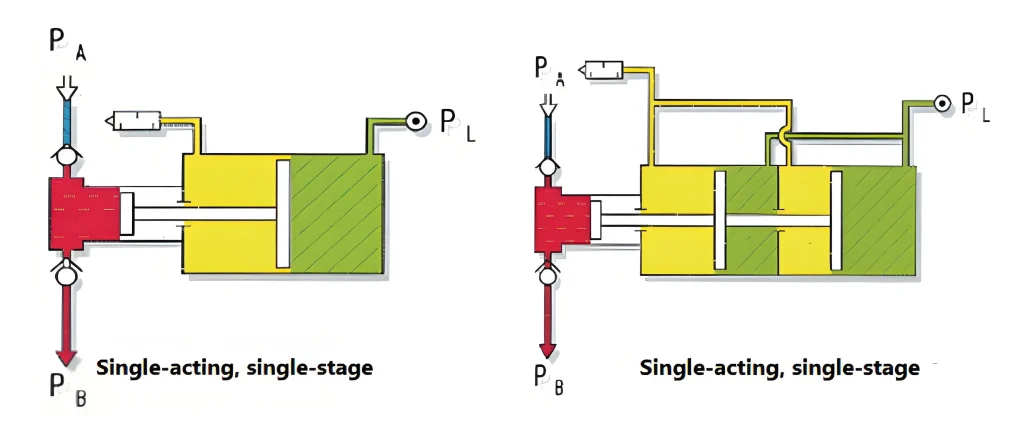
OMA gas booster pumps operate using pneumatic booster technology, where the driving medium is compressed air (PL). The system converts low-pressure driving air into a higher gas output pressure (PB) through a defined pressure ratio.
The test/boosting pressure is adjustable and can be controlled by regulating the driving air pressure. The maximum driving pressure is 10 bar, and for long service life, the recommended driving pressure is ≤ 8 bar. The driving piston diameter of this series is 160 mm, and the pump is a single-acting structure.
OMA gas booster pumps are available in multiple ratios (2.5:1 up to 100:1), allowing users to select the most suitable model according to required inlet pressure and target outlet pressure.
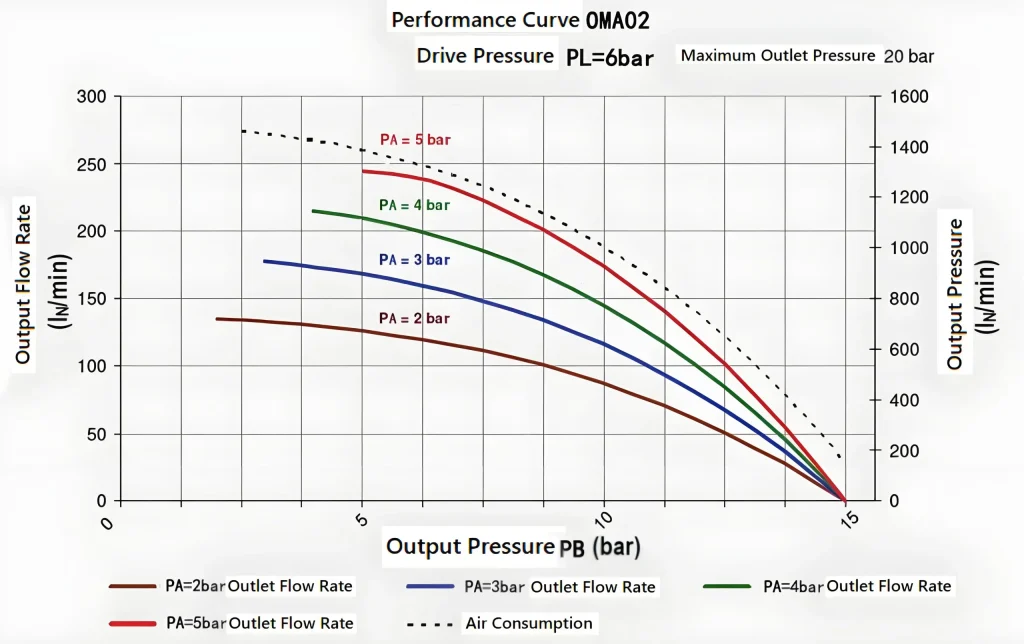
| Technical parameters |
OMA02 |
OMA04 |
OMA10 |
OMA16 |
OMA25 |
OMA40 |
OMA60 |
OMA80 |
OMA100 |
| Pressure ratio |
2.5:1 |
4:1 |
10:1 |
16:1 |
25:1 |
40:1 |
60:1 |
80:1 |
100:1 |
| Maximum compression ratio |
10:1 |
15:1 |
15:1 |
20:1 |
20:1 |
20:1 |
20:1 |
20:1 |
20:1 |
| Min. Gas inlet pressure PA (bar) |
1 |
2 |
4 |
7 |
12 |
20 |
30 |
35 |
40 |
| Max. Gas inlet pressure PA (bar) |
20 |
32 |
80 |
128 |
200 |
320 |
480 |
640 |
800 |
| Gas outlet pressure PB (bar) |
2.5×PL |
4×PL |
10×PL |
16×PL |
25×PL |
40×PL |
60×PL |
80×PL |
100×PL |
| Max. outlet pressure PB (bar) |
20 |
32 |
80 |
128 |
200 |
320 |
480 |
640 |
800 |
| Single stroke capacity (ml) |
785 |
502 |
196 |
125 |
80 |
49 |
31 |
25 |
20 |
| Driven air pressure PL (bar) |
1-8 |
1-8 |
1-8 |
1-8 |
1-8 |
1-8 |
1-8 |
1-8 |
1-8 |
| Driven air port size |
ZG1/2 ″ |
ZG1/2 ″ |
ZG1/2 ″ |
ZG1/2 ″ |
ZG1/2 ″ |
ZG1/2 ″ |
ZG1/2 ″ |
ZG1/2 ″ |
ZG1/2 ″ |
| Medium inlet port size |
ZG1/2 ″ |
ZG1/2 ″ |
ZG1/2 ″ |
ZG1/4 ″ |
ZG1/4 ″ |
ZG1/4 ″ |
ZG1/4 ″ |
ZG1/4 ″ |
ZG1/4 ″ |
| Medium outlet port size |
ZG1/2 ″ |
ZG1/2 ″ |
ZG1/4 ″ |
ZG1/4 ″ |
ZG1/4 ″ |
ZG1/4 ″ |
ZG1/4 ″ |
ZG1/4″ / M14*1.5 |
M14*1.5 |
| Booster pump Material |
Aluminum Alloy / Stainless Steel |
Aluminum Alloy / Stainless Steel |
Aluminum Alloy / Stainless Steel |
Aluminum Alloy / Stainless Steel |
Aluminum Alloy / Stainless Steel |
Aluminum Alloy / Stainless Steel |
Aluminum Alloy / Stainless Steel |
Aluminum Alloy / Stainless Steel |
Aluminum Alloy / Stainless Steel |
| Maximum operating frequency: time/min |
60 |
60 |
60 |
60 |
60 |
60 |
60 |
60 |
60 |
| Pump stop pressure PB |
2.5×PL |
4×PL |
10×PL |
16×PL |
25×PL |
40×PL |
60×PL |
80×PL |
100×PL |
| Max. Working temperature |
60 |
60 |
60 |
60 |
60 |
60 |
60 |
60 |
60 |
| Net weight kg |
19 |
18 |
18.5 |
19 |
19 |
19 |
19.5 |
19.5 |
19 |
| Standard seals |
PTFE, FKM, NBR |
PTFE, FKM, NBR |
PTFE, FKM, NBR |
PTFE, FKM, NBR |
PTFE, FKM, NBR |
PTFE, FKM, NBR |
PTFE, FKM, NBR |
PTFE, FKM, NBR |
PTFE, FKM, NBR |
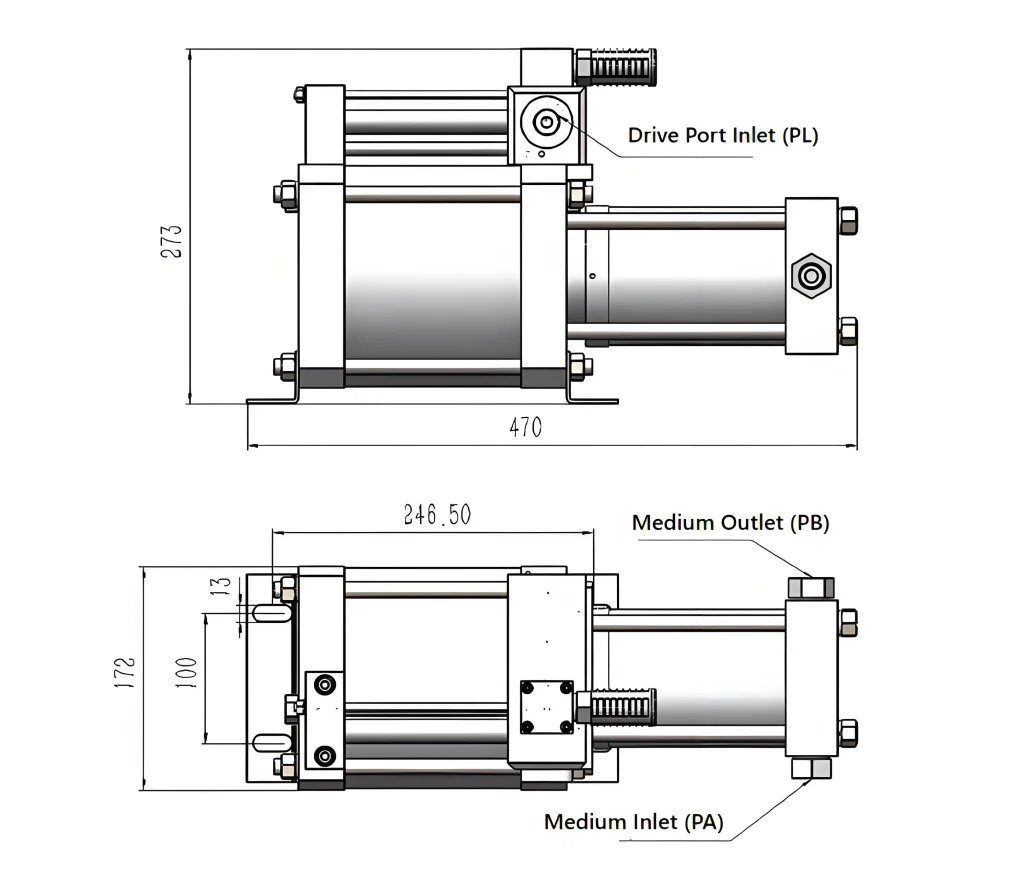
| Length mm |
470 |
448 |
438 |
438 |
438 |
438 |
438 |
438 |
438 |
| Width mm |
172 |
172 |
172 |
172 |
172 |
172 |
172 |
172 |
172 |
| Height mm |
273 |
273 |
270 |
273 |
273 |
270 |
270 |
270 |
270 |
| Inert gas service (standard) |
OMA02NL |
OMA04NL |
OMA10NL |
OMA16NL |
OMA25NL |
OMA40NL |
OMA60NL |
OMA80NL |
OMA100NL |
| Oxygen service |
OMA02OL |
OMA04OL |
OMA10OL |
OMA16OL |
OMA25OL |
OMA40OL |
OMA60OL |
|
|
| CO2 service |
OMA02CL |
OMA04CL |
OMA10CL |
OMA16CL |
OMA25CL |
OMA40CL |
OMA60CL |
|
|
الميزات والوظائف
- Air-driven operation: uses compressed air as driving source (PL), enabling safe operation without electrical power.
- Stable and adjustable pressure boosting: output pressure is controlled by adjusting the driving air pressure.
- Multiple pressure ratios available: from 2.5:1 to 100:1, allowing flexible matching to different gas inlet pressures and target outlet pressures.
- Wide inlet pressure capability (by model): supports different gas inlet pressure ranges (PA) for industrial applications.
- Defined output pressure logic: PB is directly related to PL, supporting consistent system pressure calculations.
- Standard sealing options: seals configured as PTFE / FKM / NBR, supporting common industrial gas sealing needs.
- Material options: Aluminum alloy / stainless steel versions available to adapt to different gas compatibility requirements.
- Compact structure: standardized body dimensions across most models, supporting system integration and skid mounting
مزايا المنتج
- Clear model selection logic: pressure ratio-based selection makes it easy to design a gas boosting system around a required outlet pressure.
- High-pressure output capability: max outlet pressure listed up to 800 bar (model-dependent).
- Stable pressure maintaining: pneumatic booster technology supports stable boosting behavior and controllable pressurization.
- Broad gas suitability: designed for multiple industrial gases (air, nitrogen, oxygen, helium, hydrogen, etc.).
- System integration friendly: consistent port sizes and compact dimensions simplify piping layout and installation in test benches or booster skids.
إذا كنت ترغب في معرفة المزيد عن الموديلات الأخرى، يُرجى الاتصال بفريق خدمة العملاء لدينا.
مزايا شركتنا
As a manufacturer focused on pressure testing and pneumatic boosting equipment, our strengths support stable supply and engineering cooperation for OMA gas booster pumps and related systems:
- 16+ years focused on pressure testing equipment and pneumatic boosting equipment R&D and production
- 1000+ sets annual equipment production capacity
- 8000+ customers served globally
- National High-Tech Enterprise
- 28 patents
- Technical team with 10+ years experience
- ISO9001 quality management system
- CE compliance for international markets
- Long-term export experience to Europe, North America, developed markets, plus South America, Russia, and Central Asia
- Supports both complete systems and single unit supply, with engineering technical support
Working Principle of OMA Gas Booster Pumps
OMA gas booster pumps convert compressed air energy into higher gas pressure output through reciprocating motion inside the pump body:
- Driving side (PL): compressed air drives the piston movement.
- Gas side (PA → PB): inlet gas is boosted to higher pressure according to the selected pressure ratio.
- The output pressure relationship follows: PB = Ratio × PL, and the system stops boosting when it reaches the pump stop pressure condition.
This principle supports stable boosting and predictable output pressure design, which is especially useful for pressure testing systems, leak test systems, and high-pressure gas filling / boosting stations.