



A faulty valve can trigger shutdowns, failed certification, and costly downtime. The risk grows when safety valves are tested slowly, inconsistently, or only after removal. A well-designed safety valve test bench gives you faster, safer, and more repeatable testing.
Un banc d'essai de soupapes de sécurité est un système spécialisé de test de soupapes utilisé pour vérifier la pression de tarage, la pression de recul, l'étanchéité, la levée et la contre-pression des soupapes de sécurité à ressort et pilotées. La gamme de produits Highlight comprend des systèmes manuels, informatisés et portables en ligne avec une plage de pression de 0,1 à 80 MPa, des capteurs de haute précision, des montages modulaires et des modes d'essai prêts à l'emploi.
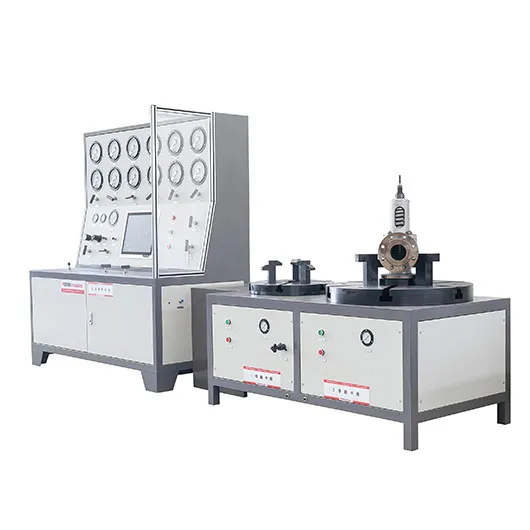
If you are a safety valve manufacturer, plant maintenance contractor, third-party inspection lab, or industrial distributor, you are not simply buying a bench. You are buying repeatability, documentation, lower downtime, and confidence that every pressure safety valve performs as intended. Highlight positions its safety valve test bench range exactly around those industrial needs.
Why Is a Safety Valve Test Bench So Important for Safety Valve Testing?
A safety valve test bench is the core test equipment used to confirm whether a valve opens at the right point, resets correctly, and keeps proper tightness after testing. Without controlled safety valve testing, users risk inconsistent pressure performance, leakage complaints, delayed approvals, and weak maintenance records.
In industrial practice, safety valves protect systems from overpressure. That means every test result matters. If the opening point is wrong, the valve may release too early or too late. If the sealing result is poor, the plant may face product loss, compliance issues, or process instability. This is why buyers increasingly look for a safety valve test machine that supports both repeatability and documentation.
At Highlight, the product direction reflects this clearly: the page focuses on benches for calibration, sealing, lift, and back pressure testing, while also supporting field and workshop use across chemical plants, power stations, and maintenance centers.
What Can a Safety Valve Test Bench Test?
A modern safety valve test bench is designed to do much more than one simple pressure test. Highlight’s page states that its systems support set pressure testing, setback pressure testing, sealing checks, lift tests, and back pressure tests for direct-loaded and pilot-operated safety valves.
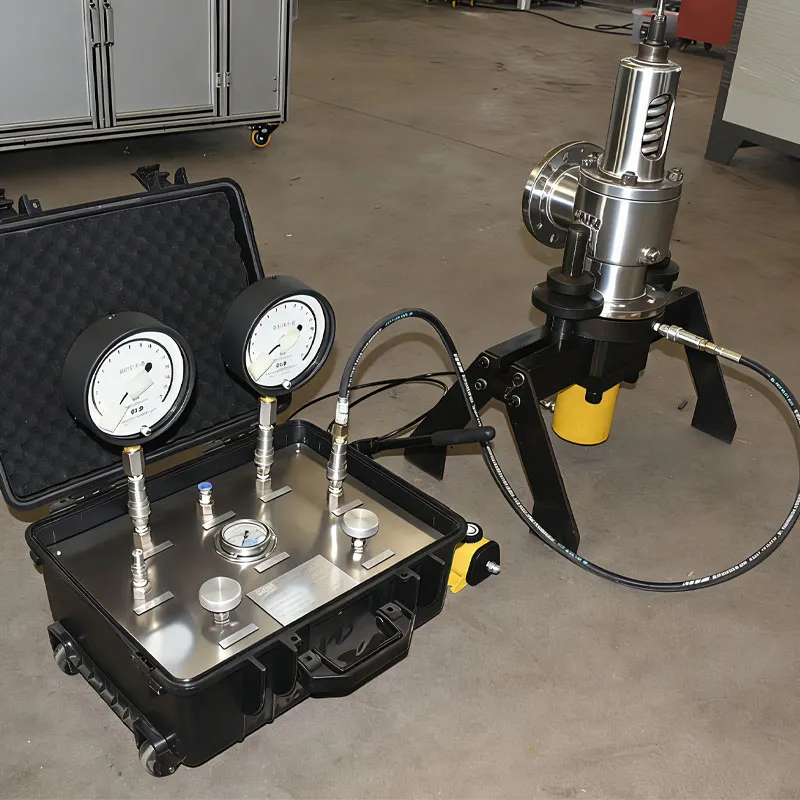
That means a single bench can support several critical tasks:
- set pressure verification
- reseating pressure observation
- tightness and sealing checks
- lift performance confirmation
- back pressure performance testing
- workshop and certification-level inspection
For industrial buyers, this matters because one machine may need to support production verification, maintenance recalibration, and third-party audit preparation. A weak or single-function tester often creates more handling steps and more chances for inconsistency.
Manual, Computer Control, or Portable Safety Valve Test Bench: Which Is Better?
This is one of the biggest purchase questions, and your page answers it well by presenting multiple product lines: Online Safety Valve Test Bench, Banc d'essai des soupapes de sûreté à commande informatisée, Manual Control Safety Valve Test Bench, and Portable Safety Valve Test Bench.
A manual bench is often the best fit for routine calibration, smaller workshops, and buyers who want dependable functions at lower complexity. A computer-controlled safety valve test bench is better for high-volume environments that need automatic logging, software control, and report generation. A portable system is ideal for in-situ testing where removing the valve would increase downtime and labor cost. Highlight explicitly positions the computer-controlled bench for high-volume manufacturers and inspection bodies, and the portable unit for on-site testing without removing the valve from the process line.
Why Is a Portable Safety Valve Test Bench So Valuable for Field Work?
Le Banc d'essai de soupape de sécurité portable (en ligne) is one of the strongest conversion points on your page. Highlight describes it as a suitcase-style unit that allows maintenance teams and inspection agencies to test safety valves in-situ without removing them from the process line. It applies a controlled supplementary force to the valve stem so the set point can be determined without raising the actual process pressure all the way to full set pressure.
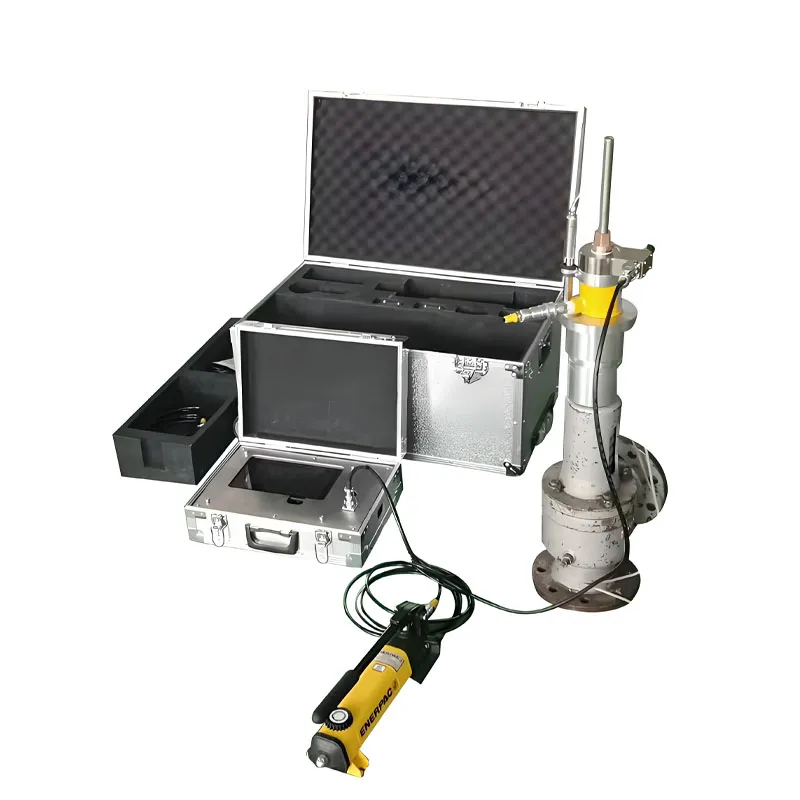
This is a major B2B buying advantage. Removing a valve from service means shutdown planning, disassembly, transport, retesting, and reinstallation. That increases labor, time, and plant disruption. A portable online unit helps reduce all of that.
Highlight also notes that this model is well suited to power plants, chemical facilities, and oil and gas installations, and that its rugged waterproof case improves field usability.
Why Is Highlight a Strong Safety Valve Test Bench Manufacturer Choice?
The strongest part of Highlight’s positioning is that the page offers a complete product path: manual, computer-controlled, online, and portable systems; support for spring-loaded and pilot-operated valves; wide pressure range; high-accuracy sensors; and multiple test modes. It also explicitly invites buyers to request standard models or tailored systems.
That is important for SEO because buyers searching “manufacturer,” “supplier,” or “customized solution” are often close to inquiry. The page already supports those intents well. What this article does is strengthen the relevance layer around those same search terms.
FAQs
What is a safety valve test bench used for?
A safety valve test bench is used for safety valve testing such as set pressure, setback pressure, sealing, lift, and back pressure verification for spring-loaded and pilot-operated safety valves.
What is the difference between a manual and computer control safety valve test bench?
A manual bench is better for routine workshop calibration and simpler operation, while a computer-controlled system adds automatic pressure ramping, data logging, and report generation for higher-volume or audit-focused work.
Why choose a portable safety valve test bench?
A portable system allows in-situ testing without removing the valve from the process line, which helps reduce shutdown time, labor, and reinstall costs.
What pressure range do Highlight safety valve test benches cover?
Highlight’s page states a 0.1–80 MPa pressure range for applications in oil and gas, power, and chemical sectors.
Which industries use safety valve testing equipment most often?
Common users include safety valve manufacturers, maintenance centers, chemical plants, power stations, oil and gas facilities, and professional inspection agencies.
Can Highlight provide customized safety valve testing solutions?
Yes. The page explicitly states support for both standard models and tailored systems, which is important for buyers with special testing workflows or valve sizes.