



When an emergency shut-off valve fails, the cost is bigger than one bad part. You risk leaks, unsafe transport, failed audits, and lost customer trust. The answer is better valve test equipment that checks strength, sealing, flow response, and shut-off speed before the valve goes into service.
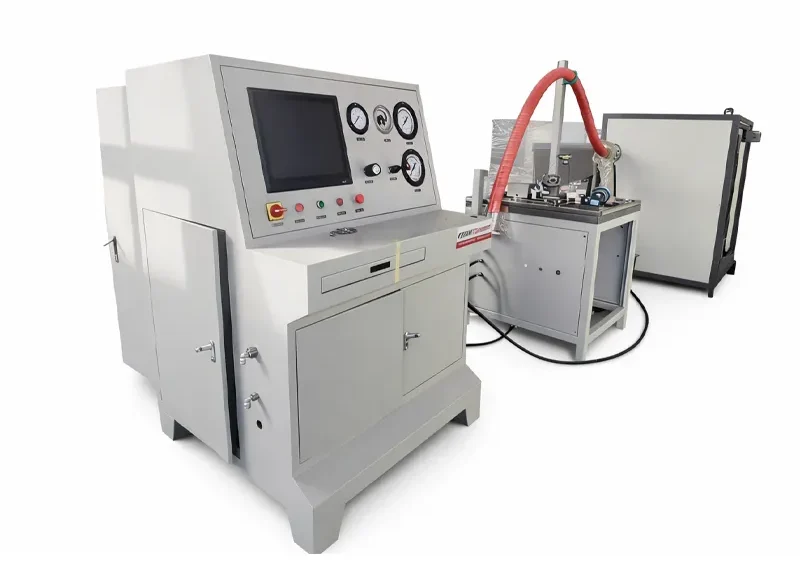
Emergency shut-off valve test equipment is a dedicated system used to verify body strength, air tightness, excess-flow action, and shut-off time on tank-truck emergency valves. It helps manufacturers and inspection teams prove compliance, improve test safety, and reduce field failures by running repeatable tests with PLC-based control, hydraulic clamping, and report generation.
What is emergency shut-off valve test equipment and why does it matter?
Emergency shut-off valve equipment is built to test the valves used on pressure tank trucks that carry liquefied gas or other pressurized media. On the current product page, Highlight presents this machine as a dedicated bench for checking sealing, opening and closing behavior, excess-flow action, and shut-off response so the valve can work in collision, rollover, or leakage events.
I see this as more than a machine. It is a risk-control tool. For manufacturers, inspection labs, and maintenance teams, one failed valve test can mean shipment delays, claim costs, and damaged reputation. A purpose-built valve test bench helps turn a complex testing process into something repeatable, documented, and easier to manage.
That matters because Highlight does not sell this as a one-off product only. The company positions itself as a global maker of high-pressure testing equipment and fluid control systems, offering both complete lines and standalone machines with customization, PLC/HMI options, remote diagnostics, and after-sales help.
How is this different from a safety valve or relief valve test setup?
A safety valve bench or relief valve calibration unit usually focuses on opening point, reseating, and sealing of safety relief valves. In contrast, this emergency shut-off valve machine is aimed at tank-truck shut-off devices and combines several checks in one platform, including body strength, air tightness, excess-flow action, and shut-off time. That is a different mission from standard relief valve testing or pressure relief valve testing.
Still, buyers often compare these product families because both are about pressure safety. A pressure relief valve protects a system by opening at a defined level. An emergency shut-off valve protects transport equipment by closing fast and sealing well when trouble happens. Both need accurate testing, but the test checks are not the same.
Highlight’s wider catalog reflects this difference. The homepage lists portable and computer-control benches for safety valve calibration, while the emergency shut-off model is described separately for shut-off valve strength and performance verification. That split is useful for buyers comparing relief valve testing equipment with shut-off valve test equipment.
Why do body strength and air-tightness checks matter for pressure safety?
The body strength test is a hydraulic procedure used to verify shell tightness and structural resistance. The page states that when working pressure is below 0.25 MPa, the test pressure equals maximum working pressure plus 0.1 MPa; when it is 0.25 MPa or above, the target is 1.5 times maximum working pressure. No visible deformation or leakage counts as qualified.
The air-tightness portion adds another layer. Highlight describes both a low-pressure test at 0.1 MPa and a high-pressure test at maximum working pressure using air. That matters because sealing faults do not always show up in a strength-only test. For transport and hazardous-media use, real pressure relief logic starts with reliable sealing and predictable behavior.
I would frame it this way for buyers: body strength protects the shell, while air-tightness protects the application. Together they support safety and reliability. For tank-truck operators, plant owners, and third-party labs, that is the core of serious valve qualification.
How does the test system use PLC control, sensor feedback, and a pressure gauge?
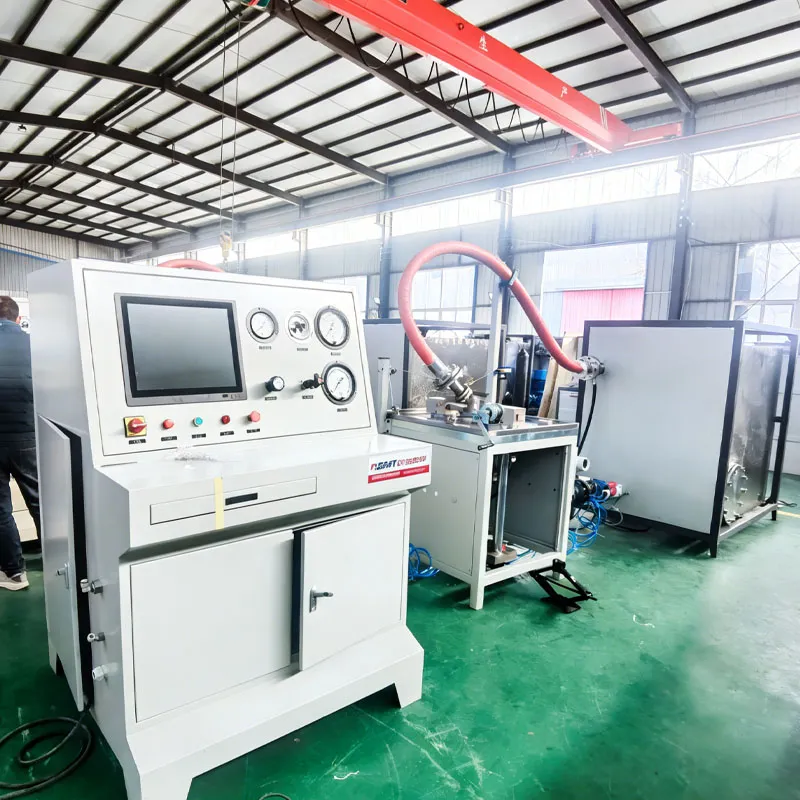
The equipment uses a computer, PLC, and control software for operation and record management. The clamping side is controlled through an electric-contact pressure gauge, while the page also lists sensor accuracy at ±0.5% FS and an electromagnetic flowmeter with ±0.5% accuracy and a 1400 L/min range.
This matters because good testing is not only about applying pressure. It is about precise control and traceable data. Highlight says the system can generate curves, records, and printable reports. That makes the machine more user-friendly for factory quality teams and more persuasive for customers who ask for documented proof.
In practice, the combination of PLC logic, flow data, displacement input, manual timing, and pressure gauge monitoring supports more accurate pressure management across the whole sequence. That is the kind of state-of-the-art control many global B2B buyers now expect from high-tech test equipment, especially when audits and export documentation are involved.
Can this equipment support on-site work, repair centers, and plant maintenance?
This specific product is a workshop-style unit with an operation console, clamping bench, and 700 L stainless-steel water tank unit, so it is not marketed as compact and portable. Still, the broader product family on the site includes portable and mobile benches, plus tools for on-site inspection and maintenance, such as portable safety-valve benches and a relief-valve grinder for field work.
That broader catalog matters for service companies and repair services. A plant may use a fixed emergency shut-off system in the shop while also needing portable tools for other valves, seats, and related checks. Highlight’s site shows this mix of permanent and mobile equipment across safety-valve, shut-off, and other pressure-testing products.
So the real answer is this: the emergency shut-off model is best for structured factory work, while the supplier’s wider range supports field and maintenance needs too. For plant operators and service teams, that broader support can simplify sourcing and training.
How do buyers judge reliability, accuracy, and long-term value?
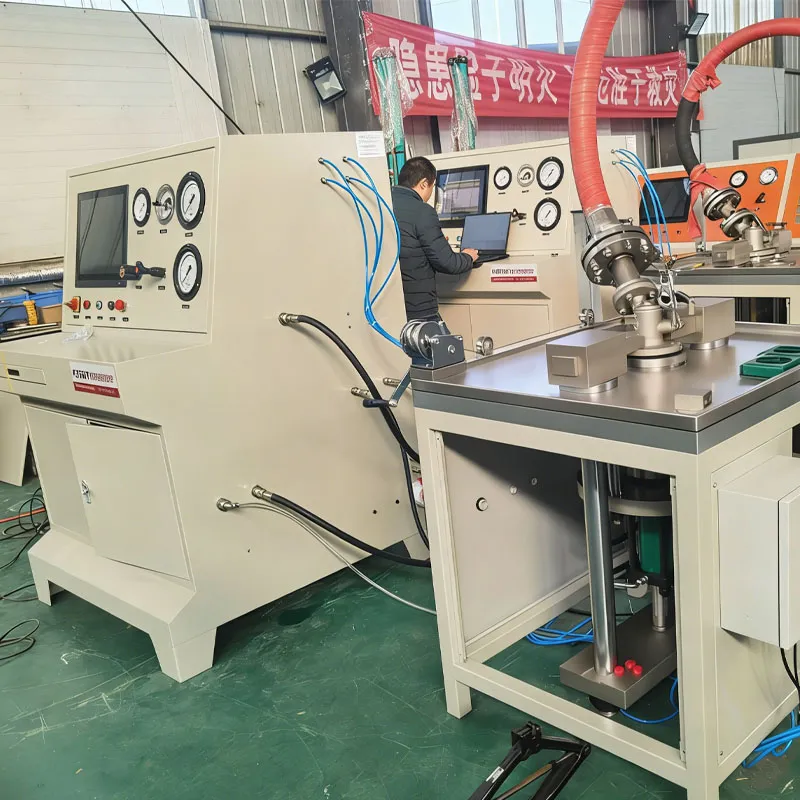
Start with hard numbers. On the product page, the machine lists 0.8 MPa driving air pressure, 0.1–4 MPa output pressure, ±0.5% FS sensor accuracy, a 700 L stainless-steel tank, and a 380V 7.5 kW variable-frequency water circulation pump. Those details show whether the bench fits your application rather than just sounding good in a brochure.
Then look at supplier strength. Highlight says it has 16+ years of manufacturing experience, 8000+ customers, ISO9001-based quality management, and export activity in 25+ countries. The homepage also says the company supports both standard models and project-based customization for pressure testing and fluid control systems.
I usually tell buyers to score equipment in three layers:
- Accuracy: can it hold and measure the needed pressure and flow?
- Reliability: can it repeat results day after day?
- Support: can the supplier solve problems after delivery?
That last point matters. Good technical support, fast problem resolution, and strong customer support often decide whether a machine creates value or creates downtime.
Why do global B2B users want custom valve testing system solutions?
Highlight’s positioning clear: complete pressure testing solutions, from booster pumps and valve benches to customized systems for global industrial users. It also says the company supports full project design and integration, standalone machines, PLC/HMI options, and remote diagnostics.
That matters because overseas buyers are rarely all the same. A valve manufacturer may need production-line consistency. A chemical plant may worry about corrosion and multi-media handling. An aerospace customer may care most about documentation and strict acceptance logic. A good valve testing system must simulate the real service conditions as closely as possible.
This is also where niche needs show up. One customer may ask for a different control system. Another may need alternate control valves, a special pressure gauge layout, or extra data logging. Some may want calibration support, others a lift assist device for safer loading. In real projects, custom engineering is often the gap between “machine delivered” and “machine useful.”
How can the right supplier reduce downtime and improve compliance?
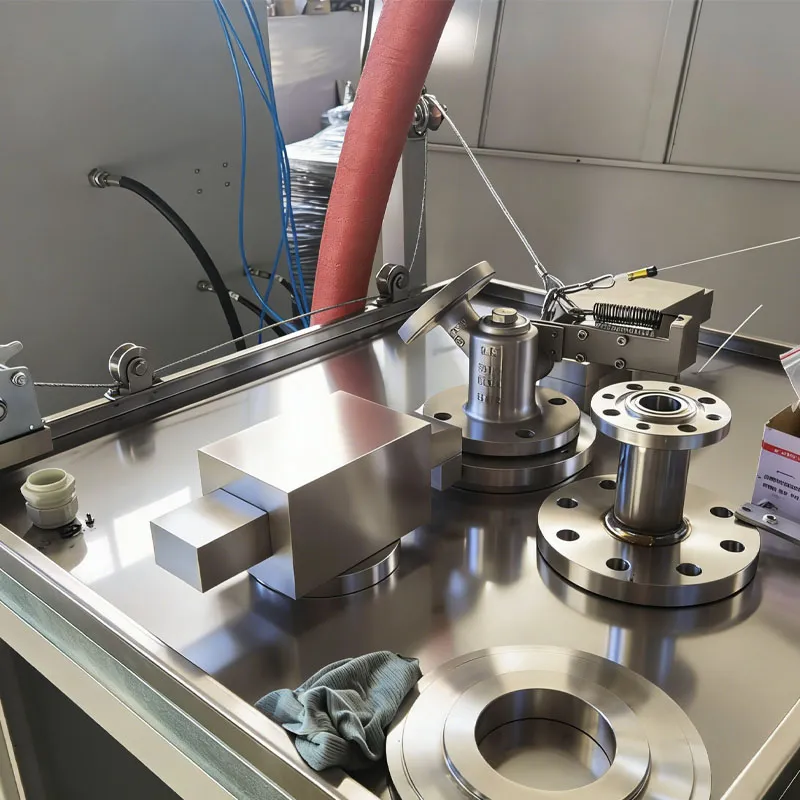
A supplier helps you most before the machine arrives and after it starts running. Highlight’s site highlights strong engineering for bench configuration, fixture matching, export documentation, and technical support. It also promotes remote diagnostics and after-sales service. For compliance-driven buyers, that is a practical advantage, not a marketing extra.
I would summarize the buying logic like this. The right supplier helps you choose the correct bench, set the right set pressure and opening pressure logic where relevant, tune the workflow, and keep the machine running. That reduces fault check delays, missed shipments, and rework. It also improves compliance with industry expectations for documented testing.
For global buyers, the desire stage is simple: you do not just want a valve machine. You want cutting-edge testing backed by real people, clear documents, and extensive on-site training when the project requires it. When a supplier can deliver that, contacting them becomes the logical next step.
A practical buyer checklist
Before choosing emergency shut-off valve test equipment, I suggest checking these points:
- Required valve sizes and media
- Needed body, sealing, and performance tests
- Required pressure and flow rate
- Accuracy of each sensor and pressure gauge
- Type of hydraulic clamping and holding method
- Report generation and traceability features
- Customization options for your process
- Availability of service, spare parts, and repair services
If the application involves hazardous transport or strict customer approval, a standard bench may not be enough. A custom solution is often safer and more cost-effective over time.
Mini case view: where this equipment fits
Imagine a tank-accessory manufacturer shipping emergency shut-off valves to multiple regions. Without one integrated bench, the team may use separate tools for strength, air, and timing checks. That increases handling, paperwork, and test variation. With one dedicated system, the factory can centralize the testing process, improve consistency, and provide better records to the buyer. That is exactly the kind of value Highlight’s product and company positioning suggest.
자주 묻는 질문
What does emergency shut-off valve test equipment do?
It tests emergency shut-off valve performance through body strength, air tightness, excess-flow, and shut-off-time checks. On Highlight’s product page, these four items are the core functions of the machine.
Is this the same as safety valve testing equipment?
No. Safety valve testing equipment usually focuses on opening point, reseating, and sealing of a safety valve or relief valve. This machine is built for emergency shut-off valves used on pressure tank trucks.
What sizes can the system handle?
The current product page lists DN25, DN50, and DN80 as the applicable nominal diameters.
How is shut-off time measured?
The page says shut-off time is checked when the test piece reaches maximum working pressure, using the flowmeter, displacement sensor, and manual timing. The target is under 5 seconds below DN50 and under 10 seconds for DN65 and above.
Can the system generate reports?
Yes. Highlight states that the control software can generate test curves and records, and supports report query and print functions.
Why would a buyer choose a custom test system instead of a standard bench?
Because media, pressure range, documentation, and workflow can vary by industry and country. Highlight explicitly says it supports project-based customization, complete system integration, and standalone machine supply.