



Proyek Peningkatan Fasilitas Uji Katup Pengaman yang Dikendalikan Komputer di Chengdu
For industrial plants, valve maintenance workshops, pressure equipment inspection centers, and testing service companies, a reliable safety valve calibration system is essential for daily operation. When a safety valve test bench has been used for many years, the mechanical structure may still be functional, but the control system, pressure display, data recording process, or operating interface may no longer meet current testing requirements.
Recently, Highlight carried out a computer-controlled safety valve test bench upgrade project in Chengdu. The project focused on improving the usability of an existing safety valve calibration bench, helping the customer make the equipment more practical for offline safety valve testing and routine calibration work.
Instead of replacing the entire test bench, an upgrade or retrofit can be a more practical choice when the original machine frame, clamping structure, and pressure system still have usable value. For many B2B buyers, this approach can help improve operation efficiency while making better use of existing equipment.
Why Upgrade a Computer-Controlled Safety Valve Test Bench?
A safety valve is designed to protect pressure vessels, pipelines, boilers, storage tanks, and process systems from overpressure. To ensure proper operation, safety valves need regular testing and calibration. A computer-controlled safety valve test bench helps operators test set pressure, sealing performance, reseating condition, and pressure holding performance under controlled conditions.
However, older test benches may face several practical problems:
- The pressure display may become unstable or difficult to read.
- The control interface may be outdated.
- Manual recording may increase operator workload.
- Electrical components may need inspection or replacement.
- The testing process may no longer match the customer’s current workflow.
- The system may need better pressure monitoring or data handling.
A safety valve test bench upgrade can help solve these problems without rebuilding the entire system from the beginning.
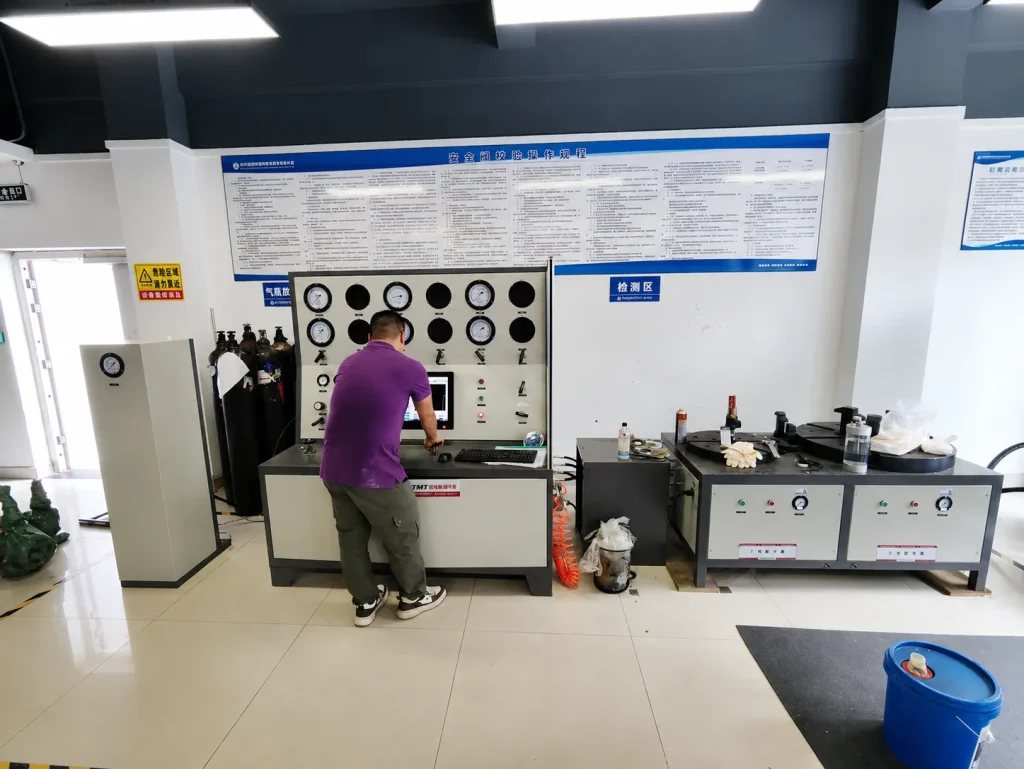
Project Background: Chengdu Safety Valve Test Bench Retrofit
The Chengdu project involved the retrofit of an existing computer-controlled safety valve calibration bench. The goal was to improve the testing workflow, support more convenient operation, and help the customer continue using the equipment more effectively.
In an offline safety valve calibration process, the valve is removed from the pipeline and tested independently on a dedicated bench. The test bench needs to provide stable pressure supply, reliable valve clamping, clear pressure monitoring, and a safe operating process.
For a computer-controlled system, the operator may also need a more practical interface for pressure observation, test operation, and record management. This makes the control system and display interface important parts of the upgrade plan.
How Computer Control Improves Safety Valve Calibration
Compared with a purely manual test bench, a computer-controlled safety valve test bench can make the calibration process more organized. Operators can monitor pressure changes through the interface, follow a clearer testing workflow, and manage test data more conveniently.
For workshops with frequent valve calibration tasks, computer-assisted operation can help reduce repeated manual recording and improve consistency in daily work. It is especially useful for users who need better process visibility, more convenient data handling, and clearer operation guidance.
However, not every project requires a fully automatic system. Some customers may only need partial upgrades, such as improved display, updated control cabinet, new sensors, better pressure monitoring, or optimized software interface. The correct solution depends on the customer’s actual testing frequency, valve size range, pressure range, and operation habits.
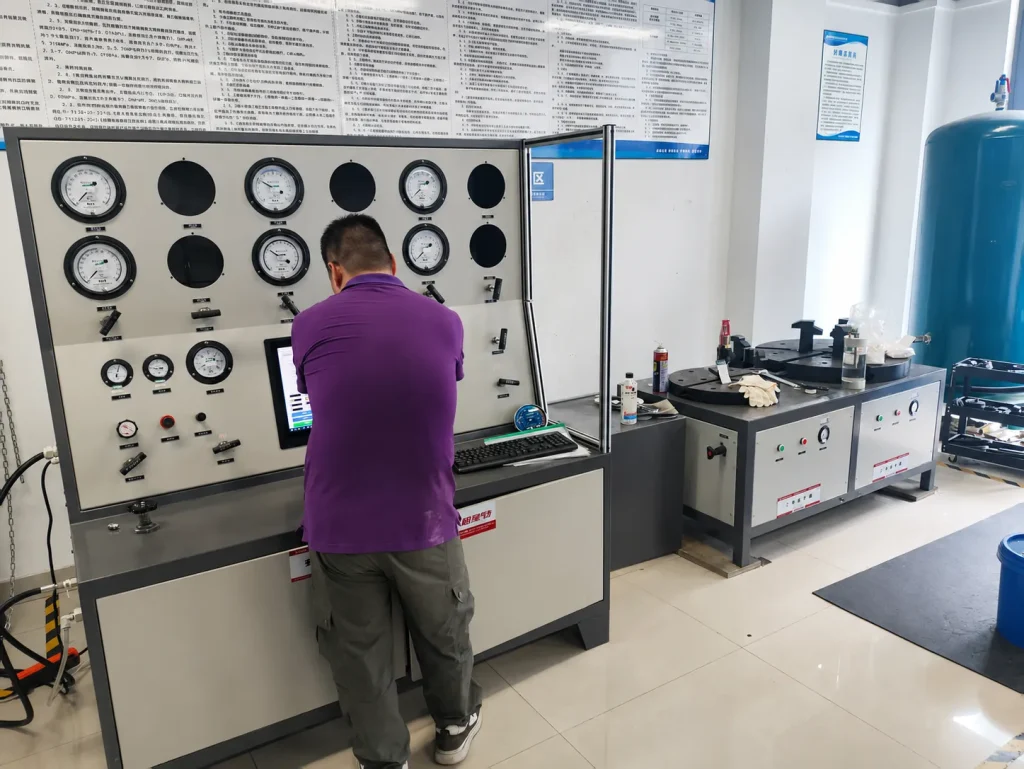
Important Technical Points During the Upgrade
Pressure Source Stability
Stable pressure supply is the foundation of safety valve calibration. If the pressure source is unstable, operators may face slow pressure rise, difficult pressure holding, or inconsistent test results. During retrofit work, the gas source, pressure pipeline, booster system, and connection layout should be checked carefully.
Clamping and Sealing Condition
The valve clamping structure and sealing condition directly affect test reliability. If the clamping system, adapter, or sealing surface is worn or mismatched, leakage may occur during the test. Mechanical inspection should be included before judging the control system alone.
Pressure Display and Measurement
Pressure gauges, sensors, and display units are core parts of a safety valve calibration bench. During an upgrade, the measurement and display system should be reviewed to ensure operators can clearly observe the set pressure and pressure holding condition.
Control Interface and Operation Logic
For a computer-controlled safety valve test bench, the interface should be easy to understand and suitable for daily workshop use. A practical system should help operators follow the testing process, observe data, and complete calibration work more efficiently.
Electrical System Condition
Older equipment may have aging wiring, outdated components, or poor cabinet organization. Electrical inspection and control cabinet improvement can help improve the long-term usability of the test bench.
Why Retrofit Can Be Better Than Full Replacement
Replacing a full safety valve test bench is not always necessary. If the main frame, clamping mechanism, pressure pipeline, and mechanical structure are still usable, upgrading the control and monitoring system may be a better option.
A valve test bench retrofit can help customers:
- Extend the service life of existing equipment
- Improve daily operation convenience
- Reduce manual recording workload
- Improve pressure monitoring visibility
- Adapt the equipment to updated testing requirements
- Reduce downtime caused by aging control components
- Improve the overall offline safety valve calibration workflow
This is why many customers choose upgrade services instead of immediately purchasing a completely new test bench.
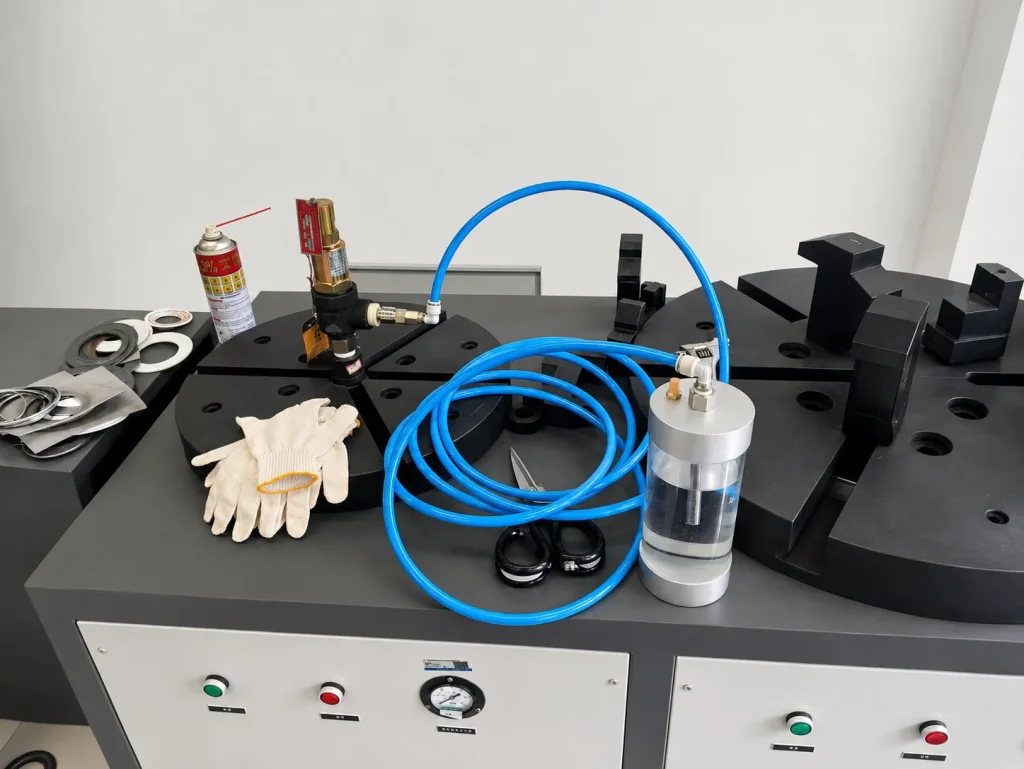
Highlight’s Support for Safety Valve Test Bench Upgrade Projects
Highlight provides safety valve test benches, valve test benches, pressure testing equipment, gas booster systems, and customized high-pressure testing solutions for industrial users. For upgrade projects, the team can evaluate the existing equipment condition and recommend a practical retrofit solution based on real working requirements.
For a computer-controlled safety valve test bench upgrade, Highlight can communicate with the customer about valve size range, test pressure, test medium, pressure source condition, control requirements, software needs, and workshop layout.
This project-based communication helps ensure the upgraded system is not only technically possible, but also suitable for the customer’s daily testing operation.
Kesimpulan
The Chengdu computer-controlled safety valve test bench upgrade project shows how retrofit work can help customers improve existing pressure testing equipment without replacing the entire machine. By upgrading the control system, pressure monitoring, operation interface, or data handling process, the test bench can better support daily offline safety valve calibration.
For buyers looking for a safety valve calibration bench, safety valve test bench upgrade, valve test bench retrofit, or customized pressure testing equipment, Sorot can provide project-based support according to valve type, pressure range, test medium, control requirements, and workshop conditions.
Pertanyaan Umum
What is a computer-controlled safety valve test bench?
A computer-controlled safety valve test bench is a calibration system used to test safety valves with computer-assisted operation, pressure monitoring, and test data handling.
When should a safety valve test bench be upgraded?
A safety valve test bench may need upgrading when the control system is outdated, pressure display is unstable, manual recording is inefficient, or the existing workflow no longer meets testing requirements.
Can an old safety valve calibration bench be retrofitted?
Yes. If the main mechanical structure, clamping system, and pressure pipeline are still usable, a retrofit can improve control, monitoring, and operation without replacing the entire machine.
What is the difference between a retrofit and a new test bench?
A retrofit improves selected parts of an existing machine, such as control system, sensors, interface, or electrical cabinet. A new test bench is a complete replacement designed from the beginning.
What information is needed for a valve test bench upgrade?
Buyers should provide existing machine photos, valve size range, test pressure, test medium, current problems, control requirements, local power supply, and data recording needs.
 English
 Français
 Русский
 Español
 Português
 العربية
 Tiếng Việt
 한국어
한국어 Bahasa Indonesia
 Deutsch
 Türkçe
 Italiano