



Sorotan Kunjungan Pelanggan Asing untuk Diskusi Teknis dan Inspeksi Bangku Uji Katup Pengaman
Bagi pembeli industri dari luar negeri, memilih bangku uji katup pengaman tidak hanya sekadar membandingkan tampilan mesin atau spesifikasi dasarnya. Keputusan pembelian yang matang sering kali memerlukan komunikasi teknis, pembahasan sampel, peninjauan proses pengujian, serta pemahaman yang jelas mengenai bagaimana peralatan tersebut akan diintegrasikan ke dalam operasional bengkel pelanggan yang sebenarnya.
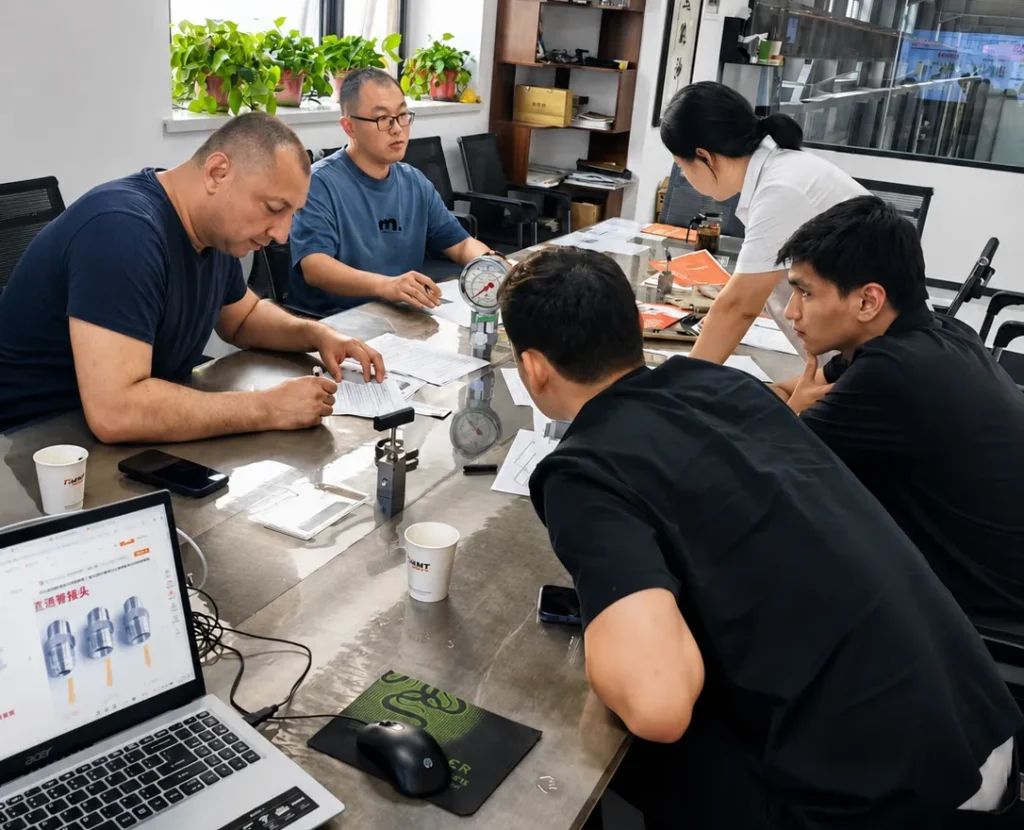
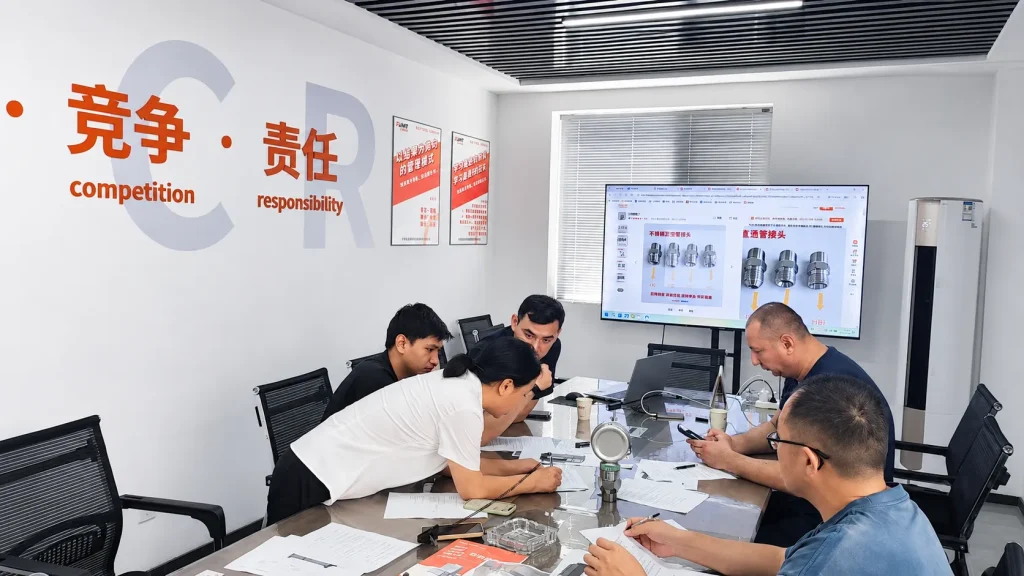
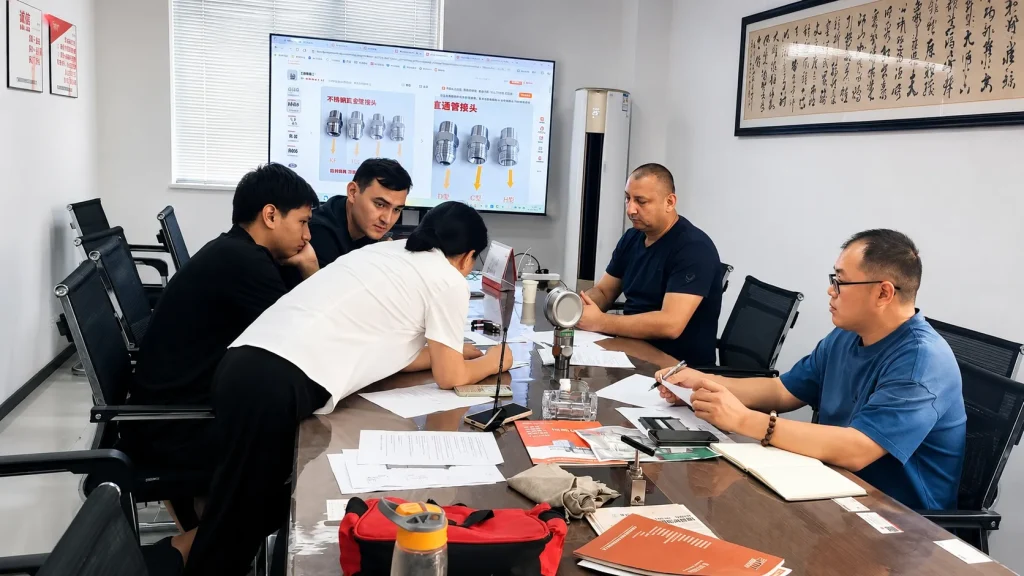
Recently, a foreign customer visited Highlight for an on-site technical discussion and inspection of safety valve calibration equipment. During the visit, the customer communicated with Highlight’s technical team about safety valve test bench configuration, calibration process, test adapters, operating requirements, and practical project details.
This visit reflects a common requirement in B2B pressure testing equipment projects: customers want to see the factory, understand the equipment design, and discuss technical details before confirming the final solution.
Why Technical Communication Matters Before Ordering a Safety Valve Test Bench
A bangku uji katup pengaman is used to test and calibrate safety valves under controlled pressure conditions. It is commonly used in pressure equipment inspection centers, valve maintenance workshops, petrochemical plants, power plants, boiler service companies, refineries, and industrial maintenance facilities.
Different customers may have different testing requirements. Some focus on offline safety valve calibration, while others need a system for batch valve maintenance, repair verification, or pressure equipment inspection. Valve size, test pressure, test medium, clamping method, control mode, and data recording requirements can all affect the final test bench design.
Because of this, technical communication before production or delivery is very important. It helps both the customer and the manufacturer confirm whether the selected safety valve calibration bench matches the real application.
Safety Valve Test Bench for Offline Calibration
An offline safety valve calibration bench is designed to test safety valves after they are removed from the pipeline or pressure system. The valve is installed on the test bench, clamped securely, pressurized under controlled conditions, and checked for set pressure, sealing performance, reseating condition, and pressure holding behavior.
Compared with temporary test setups, a dedicated safety valve test bench provides a more organized testing process. Operators can connect the valve, control pressure, observe gauge readings, monitor test behavior, and complete calibration work more efficiently.
For customers who handle frequent valve inspection or repair tasks, a reliable safety valve testing system can help improve daily maintenance workflow and reduce uncertainty during calibration.
Why Factory Inspection Builds Buyer Confidence
For international B2B buyers, a factory visit provides more confidence than a catalog or online meeting alone. Customers can see real equipment, review manufacturing details, discuss project requirements directly with engineers, and understand the supplier’s technical support process.
During a safety valve test bench inspection, customers often pay attention to:
- Machine structure and working area
- Pressure gauges and control panel layout
- Valve clamping and sealing design
- Test adapter compatibility
- Pressure source and pipeline arrangement
- Operation interface and control logic
- Equipment maintenance access
- Technical documentation and communication process
This type of inspection helps reduce misunderstanding before production, shipment, or final project confirmation.
Highlight’s Support for Overseas Valve Testing Projects
Sorot focuses on pressure testing equipment, safety valve test benches, valve test benches, gas booster systems, hydrostatic test machines, leak test machines, and customized high-pressure testing solutions.
For overseas customers, Highlight can support technical communication, equipment configuration, factory inspection, installation guidance, commissioning communication, and after-sales service according to project requirements. The goal is to help buyers select a practical testing solution instead of a generic machine that may not fit their workflow.
This customer visit shows the value of direct communication between the buyer and the manufacturer. By discussing technical details at the factory, both sides can better confirm the equipment configuration and reduce project risk.
Kesimpulan
The foreign customer’s visit to Highlight for technical discussion and safety valve test bench inspection demonstrates the importance of factory communication in international pressure testing equipment projects. For B2B buyers, a successful project depends not only on machine production, but also on technical matching, configuration confirmation, and long-term support.
For customers looking for a safety valve test bench, safety valve calibration bench, offline safety valve calibration system, valve testing machine, or customized pressure testing equipment, Highlight can provide project-based solutions according to valve type, pressure range, test medium, control requirements, and workshop conditions.
Pertanyaan Umum
Untuk apa bangku uji katup pengaman digunakan?
A bangku uji katup pengaman is used to test and calibrate safety valves, including set pressure testing, sealing performance checking, reseating observation, and pressure holding verification.
Why should customers visit the factory before ordering a safety valve calibration bench?
A factory visit helps customers inspect real equipment, discuss technical details, check machine structure, and confirm whether the test bench configuration matches their actual application.
What is offline safety valve calibration?
Offline safety valve calibration means the safety valve is removed from the pipeline or pressure system and tested independently on a calibration bench under controlled conditions.
Can a safety valve test bench be customized?
Yes. A safety valve test bench can be configured according to valve type, valve size, test pressure, test medium, clamping method, control mode, and data recording requirements.
What information should buyers provide before technical discussion?
Buyers should provide valve type, size range, pressure range, test medium, control preference, local power supply, testing workflow, and any special project requirements.
 English
 Français
 Русский
 Español
 Português
 العربية
 Tiếng Việt
 한국어
한국어 Bahasa Indonesia
 Deutsch
 Türkçe
 Italiano