



Producing reliable pressure testing equipment requires more than advanced components and experienced technicians. Without consistent management standards, clear departmental coordination, and effective quality-control procedures, even a well-designed system may face delays, documentation gaps, or inconsistent execution.
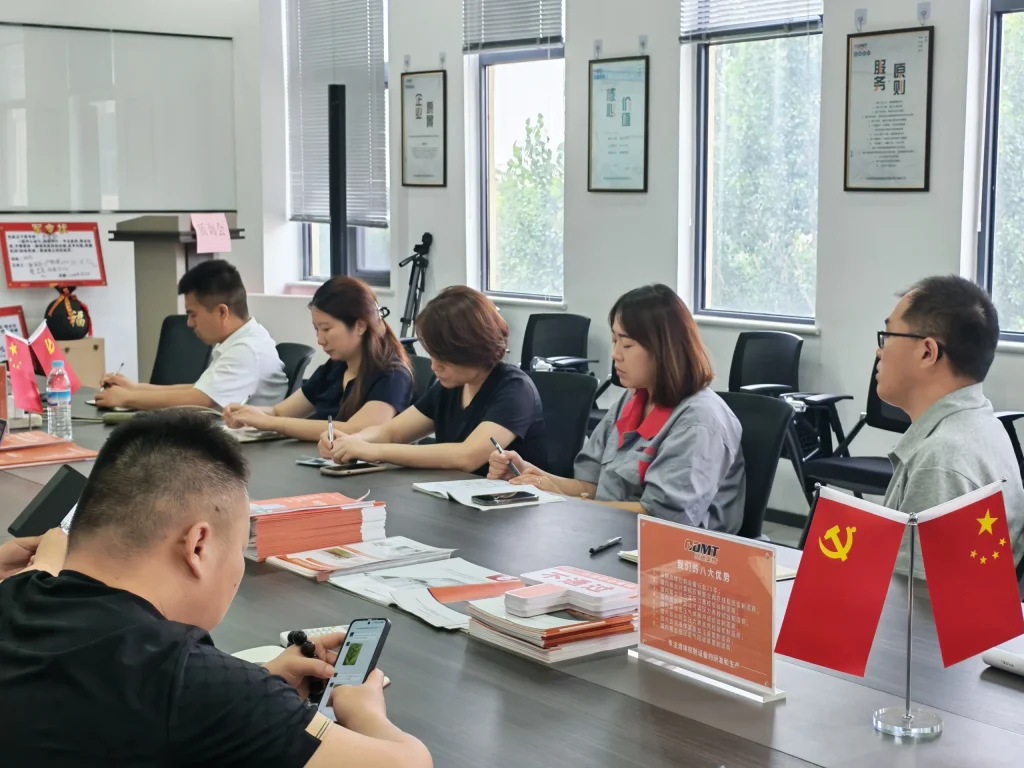
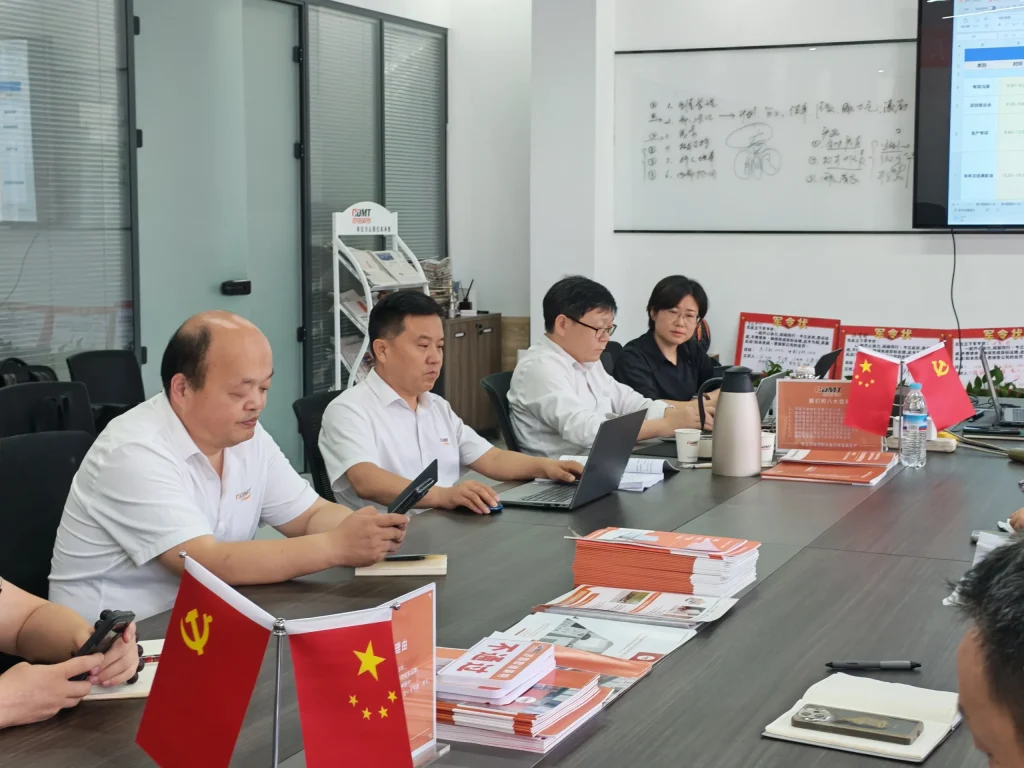
To strengthen its internal management capabilities, Highlight recently organized a leadership learning and training session focused on improving product quality and company operations. Members of the management team reviewed how stronger leadership, clearer responsibilities, and continuous process improvement can support the design, production, inspection, delivery, and service of industrial testing equipment.
The training reflects Highlight’s commitment to developing not only better machines, but also a more efficient organization capable of serving international distributors, valve manufacturers, inspection agencies, laboratories, engineering contractors, and industrial end users.
Highlight’s management team participates in a structured learning session focused on product quality and operational improvement.
Why Is Leadership Training Important for a Pressure Testing Equipment Manufacturer?
Industrial testing systems often involve high pressure, multiple control components, customized fixtures, data acquisition, safety protection, and project-specific technical requirements. Therefore, quality cannot depend only on final inspection.
For a professional pressure testing equipment manufacturer, quality management must begin when the customer first provides information about the test medium, pressure range, test object, diameter, control method, applicable standard, and installation environment.
Leadership training helps ensure that sales, engineering, purchasing, production, quality inspection, logistics, and after-sales teams follow the same project objectives. When responsibilities are clearly defined, technical information can be transferred more accurately from the inquiry stage to production and delivery.
This is particularly important for customized equipment such as:
- Safety valve testing and calibration systems
- General industrial valve testing machines
- Hydrostatic pressure testing systems
- Gas dan liquid booster systems
- Pressure gauge testing equipment
- Storage tank accessory testing systems
- Burst, leak, pulse, and fatigue testing equipment
Customers can review Highlight’s broader range of pressure testing equipment, booster pumps, valve test benches, and high-pressure components according to their specific industrial applications.
By improving management awareness at the leadership level, Highlight aims to make quality control a continuous process rather than a final production step.
How Does Better Management Improve Safety Valve Test Bench Quality?
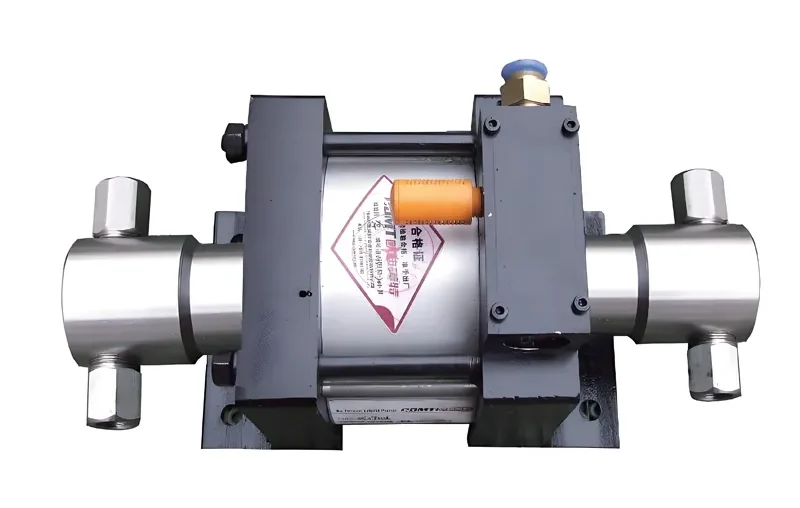
A bangku uji katup pengaman must accurately verify important performance indicators such as set pressure, reseating pressure, tightness, leakage, lift, and calibration results.
Differences in valve size, valve structure, test medium, clamping method, and pressure range can significantly affect system design. During internal project evaluation, the technical team may need to determine whether the customer requires:
- Manual control equipment
- Computer-controlled testing equipment
- PLC-controlled calibration equipment
- Portable safety valve test bench
- Online safety valve test bench
- Containerized safety valve testing system
These configurations may also be described by industrial buyers as a PSV test bench, safety relief valve test bench, pressure safety valve test bench, pressure relief valve test bench, relief valve test bench, or PSV calibration test bench.
Leadership coordination helps ensure that the selected pressure source, sensor range, control logic, fixture design, and safety protection are consistent with the customer’s actual testing requirements.
For example, the online bangku uji katup pengaman is intended for in-service calibration where the valve remains installed on a boiler, pressure vessel, or pressure pipeline. This creates different operational and safety requirements from a conventional offline calibration bench.
Buyers requiring a movable workshop or field solution can also review the portable safety valve test bench.
Strengthening Quality Control for Valve Test Bench Projects
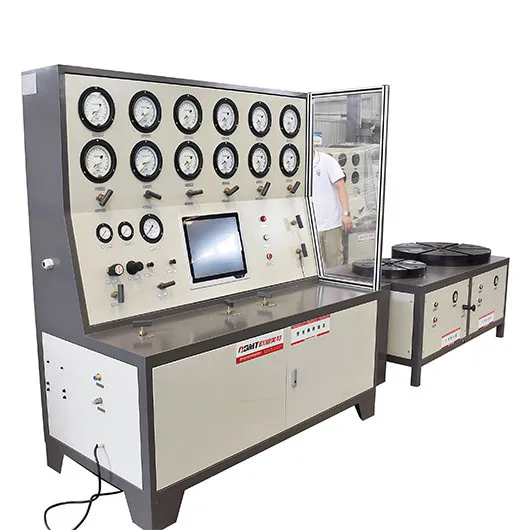
A bangku uji katup may be used to test gate valves, globe valves, ball valves, check valves, butterfly valves, and other industrial valves.
Depending on the application, the equipment may perform:
- Hydrostatic shell strength testing
- Seat leakage testing
- High-pressure sealing verification
- Low-pressure gas tightness testing
- Pressure-holding inspection
- Valve body strength verification
The training emphasized the importance of managing every step of a customized valve testing machine project, including:
- Confirming valve types and dimensions
- Reviewing maximum test pressure
- Selecting horizontal or vertical clamping
- Determining hydraulic or pneumatic test media
- Designing fixtures and sealing connections
- Configuring manual, PLC, or HMI control
- Establishing inspection and commissioning procedures
- Preparing operating instructions and technical documents
These procedures support the manufacture of equipment such as a hydraulic valve test bench, high-pressure valve test bench, butterfly valve test bench, valve test rig, valve test stand, and leak test bench.
For buyers comparing valve test bench manufacturers or suppliers, management capability is an important consideration. The manufacturer must not only design the machine correctly but also control technical communication, component sourcing, assembly, factory testing, packaging, delivery, and after-sales support.
Improving Hydrostatic and High-Pressure Testing Equipment Production
The company’s management training also supports quality consistency across its broader pompa cairan dan peralatan uji tekanan portfolio.
Industrial buyers use several related search terms when looking for these systems:
- Hydrostatic testing equipment
- Hydrostatic testing machine
- Hydrostatic pressure tester
- Hydraulic pressure testing machine
- Pressure testing machine
- High-pressure testing equipment
- Pressure test system
- Leak test machine
- Burst test bench
- Pulse fatigue test bench
Although these keywords describe related equipment, the actual configuration depends on the test object and testing objective.
A hydrostatic testing machine for a valve body may require a different clamping structure from a system used for hoses, pipelines, cylinders, pressure vessels, tanks, housings, fittings, or automotive components.
A bangku uji ledakan tekanan may require additional shielding, remote control, high-speed data acquisition, and controlled pressure release. A fatigue or pressure cycling system requires stable and repeatable pressure pulses over a defined number of cycles.
Improved operational management helps engineers identify these differences early. It also encourages departments to use standardized project checklists, technical review procedures, production records, and factory acceptance testing processes.
The objective is not simply to manufacture a machine capable of generating pressure. It is to provide a complete pressure testing system that is safe, repeatable, maintainable, and suitable for long-term industrial use.
Coordinating Gas Booster Pump Projects
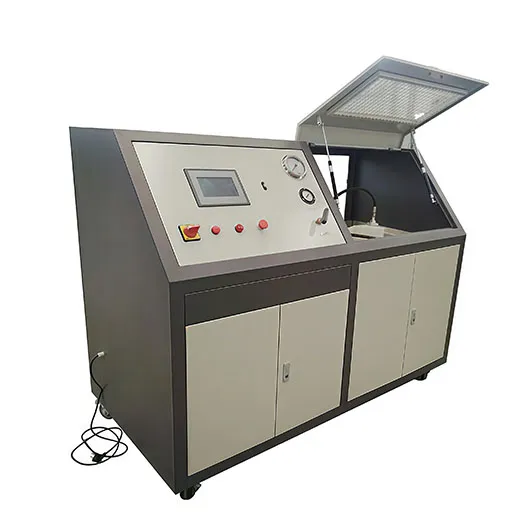
High-pressure testing and gas transfer systems frequently require a reliable pompa pendorong gas as the pressure source.
An air-driven gas booster pump uses compressed air as the driving force and can be configured for gases such as nitrogen, oxygen, hydrogen, helium, natural gas, and compressed air, subject to pump model, material, seal, and cleanliness requirements.
Related industrial keywords include:
- Pneumatic gas booster pump
- Air-driven gas booster pump
- High-pressure gas booster
- Gas pressure booster
- Gas booster compressor
- Gas booster system
- Nitrogen booster pump
- Oxygen booster pump
- Hydrogen booster pump
- Natural gas booster pump
- Compressed air booster
Effective management is particularly important in gas boosting projects because the engineering team must confirm gas properties, inlet pressure, required outlet pressure, expected flow, operating frequency, ambient conditions, installation area, and safety requirements.
For projects requiring an integrated pressure source, control cabinet, valves, gauges, pipelines, and safety devices, Highlight can evaluate a complete sistem penguat gas instead of supplying only an individual pump.
Coordinating Liquid Booster Pump and Hydraulic Test Projects
The same management principles apply when selecting a pompa penguat cairan or pneumatic hydraulic pump.
These pumps may be used for:
- Pengujian tekanan hidrostatis
- Chemical injection
- Hydraulic power supply
- Proof testing
- Leakage testing
- Burst testing
- Fatigue testing
- High-pressure liquid transfer
Relevant product terms include air-driven liquid booster pump, pneumatic liquid pump, pneumatic hydraulic pump, high-pressure liquid pump, gas-liquid booster pump, and liquid pressure pump.
Clear project coordination helps avoid selecting a pump based only on maximum output pressure. Engineers must also consider flow rate, pressure ratio, test medium, material compatibility, seal life, inlet conditions, operating frequency, and duty cycle.
The leadership training reinforced the importance of completing this technical evaluation before confirming the final equipment configuration.
Supporting Pressure Gauge Testing Equipment Projects
A alat uji pengukur tekanan project may involve more than basic calibration.
Depending on the production or inspection process, customers may require:
- Pressure gauge calibration
- Overpressure leakage testing
- Pressure-holding inspection
- Pulse fatigue testing
- Automatic oil filling
- Cover tightening and edge sealing
- Rotary case leakage testing
- Test data collection
Customers searching for a pressure gauge testing machine, pressure gauge test bench, digital pressure gauge test equipment, high-pressure gauge test equipment, or pressure gauge calibration table may require different levels of automation.
A pressure gauge manufacturer may need a production-line solution, while a calibration laboratory or third-party inspection agency may focus more on measurement accuracy, repeatability, traceability, and report generation.
Stronger management coordination helps ensure that the pressure source, reference instrument, test range, fixture arrangement, control software, and result-determination method match the customer’s quality-control process.
Improving Tank Accessory Test Bench Project Management
A tank accessory test bench presents another set of specialized testing requirements.
It may be used to inspect:
- Breather valves
- Pressure-vacuum valves
- Hydraulic safety valves
- Flame arresters
- Emergency vent devices
- Tank-truck breathing valves
- Atmospheric storage tank accessories
For these projects, management coordination may cover positive pressure testing, vacuum testing, opening performance, closing performance, leakage inspection, fixture replacement, data acquisition, and operator training.
Because tank accessory testing equipment often combines several testing functions in one platform, accurate communication between the customer, engineering team, production team, and commissioning personnel is essential.
Improved internal processes help Highlight manage both standard tank testing equipment and customized comprehensive test benches for petroleum storage tanks and tank trucks.
Extending Quality Management to High-Pressure Components
The reliability of a pressure testing system depends not only on the main pump or test bench. High-pressure valves, fittings, tubing, sensors, manifolds, and sealing components also affect system accuracy and safety.
Sorotan high-pressure valve components termasuk:
- Katup manifold instrumen
- Two-valve, three-valve, and five-valve manifolds
- High-pressure needle valves
- Pneumatic needle valves
- Bleed valves
- Gauge valves
- High-pressure tubing connections
A high-pressure needle valve may be used to regulate flow, isolate pressure, protect instruments, or control depressurization.
Instrument manifold valves can simplify the installation, isolation, equalization, calibration, and maintenance of pressure gauges and transmitters. Ferrule fittings can help create compact tubing connections when the correct material, size, pressure rating, and installation procedure are selected.
Management training encourages engineering and production teams to treat these components as part of the complete system rather than as unrelated accessories.
How Can Operational Training Improve Customer Service?
For international B2B buyers, equipment quality is only one part of the purchasing decision. Customers also evaluate response efficiency, technical communication, documentation, delivery coordination, installation support, training, warranty service, and spare-parts availability.
The leadership learning session reinforced Highlight’s complete industrial equipment service process:
Inquiry → Technical Evaluation → Configuration Confirmation → Production → Factory Testing → Delivery → Installation Guidance → Warranty Support
Better internal operations can help the company:
- Respond to technical inquiries more efficiently
- Reduce missing or repeated project information
- Improve communication between sales and engineering
- Strengthen production schedule management
- Standardize inspection and commissioning
- Prepare clearer manuals and technical documents
- Coordinate packaging and international delivery
- Support remote diagnosis and on-site service
Customers can also review Highlight’s technical support services for installation guidance, troubleshooting, training, maintenance, and long-term equipment operation.
The training supports closer coordination among management, engineering, production, quality control, and customer-service functions.
Turning Internal Learning into Greater Customer Value
The purpose of leadership training is not limited to internal administration. Its value should ultimately be reflected in the equipment and service delivered to customers.
By strengthening management awareness and operational discipline, Highlight aims to improve:
- Product consistency
- Technical evaluation accuracy
- Component and supplier control
- Assembly quality
- Factory acceptance testing
- Project traceability
- Delivery coordination
- Installation and training support
- Long-term customer relationships
Whether the project involves a PSV test bench, valve testing machine, hydrostatic pressure tester, gas booster pump, liquid booster pump, pressure gauge testing machine, or tank accessory test bench, the same principle applies: reliable equipment begins with reliable processes.
Customers with non-standard pressure ranges, media, fixtures, control functions, or installation conditions can learn more about Highlight’s
Turning Internal Learning into Greater Customer Value
The purpose of leadership training is not limited to internal administration. Its value should ultimately be reflected in the equipment and service delivered to customers.
By strengthening management awareness and operational discipline, Highlight aims to improve:
- Product consistency
- Technical evaluation accuracy
- Component and supplier control
- Assembly quality
- Factory acceptance testing
- Project traceability
- Delivery coordination
- Installation and training support
- Long-term customer relationships
Whether the project involves a PSV test bench, valve testing machine, hydrostatic pressure tester, gas booster pump, liquid booster pump, pressure gauge testing machine, or tank accessory test bench, the same principle applies: reliable equipment begins with reliable processes.
Customers with non-standard pressure ranges, media, fixtures, control functions, or installation conditions can learn more about Highlight’s custom pressure testing and booster system capabilities.
Highlight Continues to Invest in Quality and Operational Improvement
Highlight will continue organizing internal learning, technical discussions, management reviews, and employee training to support the continuous improvement of its products and services.
For overseas buyers, selecting a suitable pressure testing equipment supplier requires more than comparing maximum pressure and machine price. It is also important to evaluate:
Engineering experience
- Customization capability
- Manufacturing control
- Factory testing procedures
- Technical documentation
- Delivery support
- Installation guidance
- Training capability
- Spare-parts availability
- After-sales service
Customers planning a high-pressure testing, valve calibration, gas boosting, liquid pressurization, leakage testing, burst testing, or fatigue testing project can provide the test object, medium, inlet pressure, target pressure, required flow, control method, applicable standard, and installation environment.
The Highlight technical team can then evaluate the requirements and recommend a suitable standard machine or customized testing solution.
Contact Highlight to request a quotation, technical datasheet, equipment selection recommendation, or customized pressure testing system proposal.
 English
 Français
 Русский
 Español
 Português
 العربية
 Tiếng Việt
 한국어
한국어 Bahasa Indonesia
 Deutsch
 Türkçe
 Italiano