



A weak safety valve can turn normal pressure into a serious plant risk. If safety valves are not tested on time, small errors may become shutdowns, leaks, or unsafe overpressure events. An online safety valve test bench helps teams verify valve performance faster, safer, and with better records.
An 온라인 안전 밸브 테스트 벤치 is testing equipment used to check safety valves while they remain installed or close to operating conditions. It helps measure lifting force, set pressure, reseating behavior, and valve response. For power plants, chemical workshops, oil and gas sites, and test laboratories, it supports safer safety valve test work, calibration, and verification.
What Is an Online Safety Valve Test Bench for Safety Valves?
An online safety valve test bench is a special test system used to check the opening behavior of safety valves without fully removing them from the production line in many cases. It is often used for online safety valve testing, safety valve online verification, and field service work. Instead of sending every valve to a workshop, the operator can test pressure behavior, lifting force, and valve core opening under controlled conditions.
In simple words, the system helps answer one key question: will the safety valve open when the protected equipment needs it? Safety valves protect boilers, tanks, pipelines, pressure vessels, compressors, and fluid control systems. When the pressure rises above the set pressure, the valve disc should lift and release pressure. If the valve flap sticks, opens late, leaks, or closes poorly, system safety may be at risk.
For B2B users, the value is not only the test itself. The value is control. A good safety valve test bench gives clear test data, digital display readings, repeatable test pressure control, and better records for compliance. For a plant manager, inspection company, or valve service center, this means fewer guesses and better decisions.
Why Do Safety Valves Need Regular Safety Valve Test Procedures?
Safety valves work like the last guard of a pressure system. Most of the time, they wait quietly. But when overpressure happens, they must respond at once. That is why a regular safety valve test is so important. If the valve has corrosion, spring fatigue, dirt, wrong adjustment, or seat damage, it may not open at the correct pressure.
In high-pressure industries, a failed pressure safety valves program can lead to product loss, damaged equipment, and unsafe working conditions. A boiler, reactor, storage tank, gas cylinder line, or chemical process may depend on accurate safety valves and pressure relief devices. The goal of testing is not to create paperwork. The goal is to confirm that the valve still performs its safety job.
A practical safety valve test checks several points:
- Set pressure: the pressure where the valve begins to open
- Lifting force: the force needed to lift the valve core
- Reseating behavior: how the valve closes after pressure drops
- Leakage condition: whether the sealing surface holds pressure
- Valve disc movement: whether the valve opens smoothly
- Calibration record: whether the result can be traced and stored
For many plants, safety valve calibration is part of a larger maintenance plan. The plan may include inspection, cleaning, pressure test work, replacement of damaged parts, and final verification. A safety valve test bench supports this work with controlled pressure and measurable results.
How Does Online Safety Valve Testing Work On-Site?
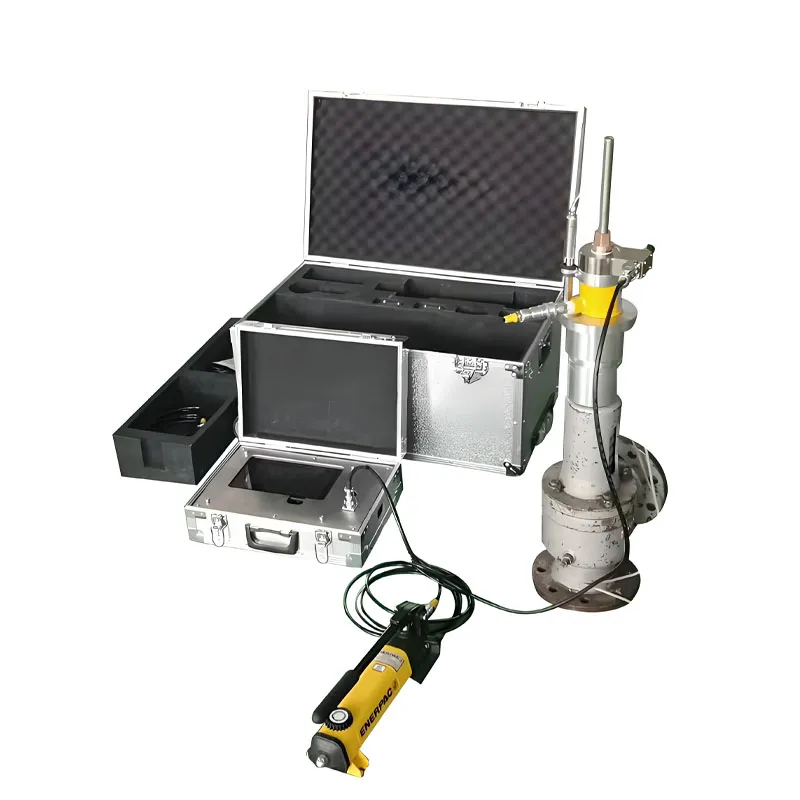
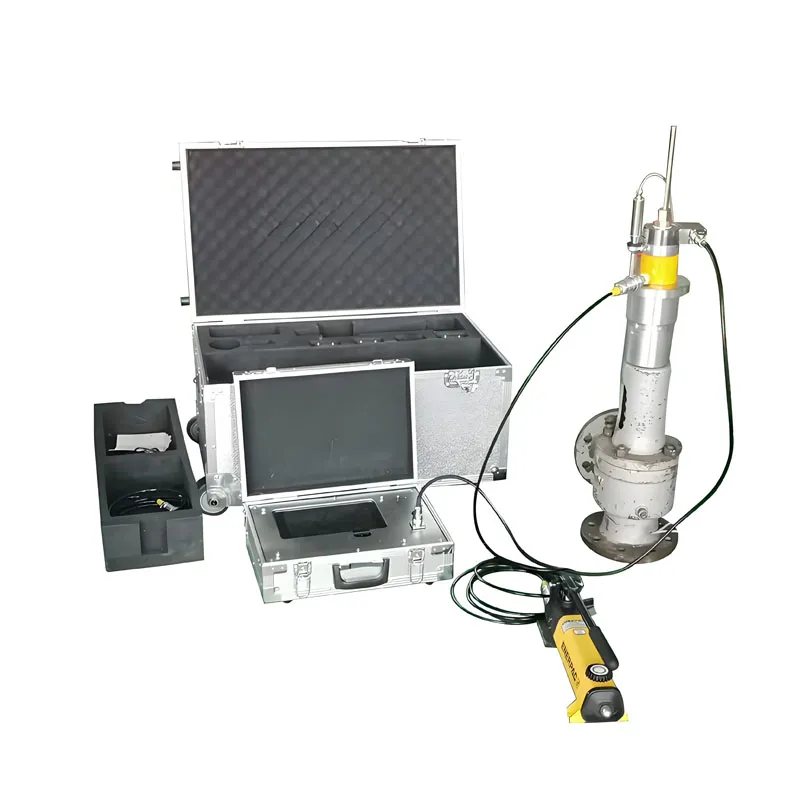
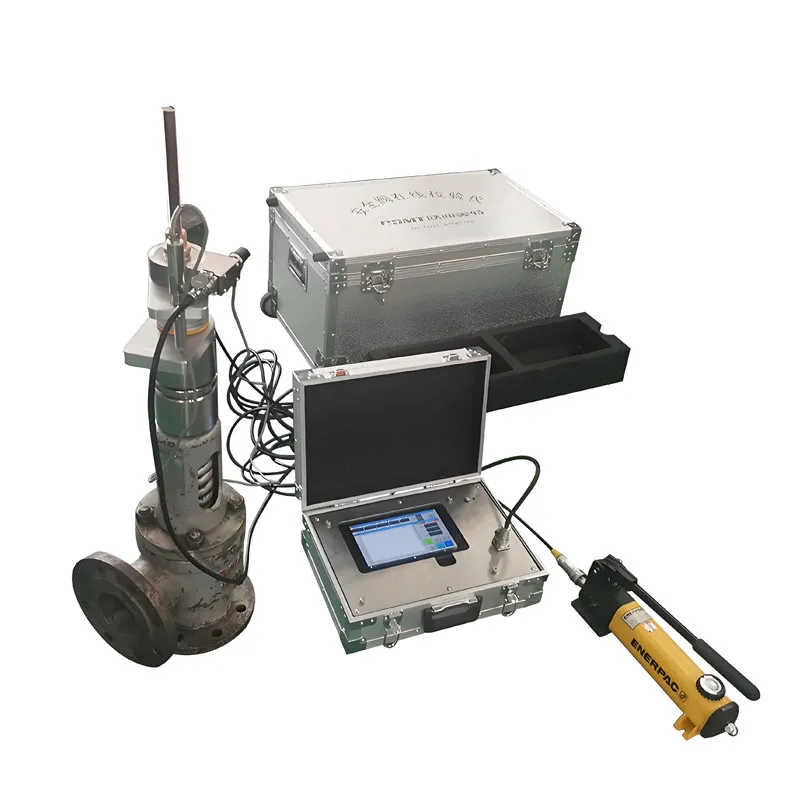
Online safety valve testing uses controlled external force and pressure data to calculate or verify valve opening behavior. The operator installs the test fixture on the valve, connects sensors, sets the test conditions, and records the result through a data acquisition system. The method is often used for on-site inspection when removing the valve would be costly or slow.
In many cases, the equipment applies hydraulic force through a lifting device. The hydraulic pump provides stable force, while pressure sensors and displacement sensors monitor the valve response. The system can record lifting force, displacement, valve core opening, and valve core opening height. This helps the operator judge whether the safety valve online result matches the required setting.
This type of testing without full disassembly can reduce downtime. It is useful during plant shutdowns, annual inspections, and emergency checks. It also helps maintenance teams test many safety valves in one service window. For large plants with hundreds of safety valves, the time saving can be important.
Online Safety Valve Test Bench vs Offline Safety Valve Calibration Bench
An 온라인 안전 밸브 테스트 벤치 and an offline safety valve calibration bench both support safety valve calibration, but they serve different work styles. Online testing helps check installed safety valves with less removal work. Offline testing is usually done in a workshop after the valve is removed from the pipeline.
Offline testing gives more control over cleaning, repair, sealing checks, and strength testing. It is useful when the valve needs full maintenance. A safety valve calibration bench can test the valve in a controlled workshop setting, often using gas, air, water, or hydraulic pressure depending on the valve and standard.
Online testing is faster for inspection rounds. It can support portable safety valve online calibration and safety valve online calibration device work. Some users may search for an OD-DL-S on-line safety valve calibrator style system when they need field calibration. The important point is not the name. The important point is whether the equipment can provide stable force, accurate readings, safe clamping, and clear reports.
Which Industries Use Safety Valve Testing Equipment?
Safety valves are used wherever pressure can rise above a safe limit. This includes power plants, chemical plants, oil and gas facilities, new energy systems, aerospace-related test centers, pressure vessels, and laboratories. These users often need safety valve testing equipment that can handle different media, different pressure ranges, and different operating conditions.
In a boiler room, pressure relief valves in boilers protect steam systems from overpressure. In chemical production, safety valves and pressure relief devices protect reactors, storage tanks, and pipelines. In oil and gas sites, pressure safety valves may protect separators, compressors, and process units. In laboratories, safety relief valve testing may support research systems and high-pressure experiments.
Typical users include:
- Valve manufacturers that need factory safety testing before delivery
- Third-party testing laboratories that provide verification of safety valves
- Chemical plant testing workshops that maintain process valves
- Oil and gas maintenance teams that service PSV devices
- Power plants that need on-site safety valve inspection
- New energy companies that use gas, liquid, and hydrogen-related systems
- Aerospace and research organizations that need precise pressure control
Some buyers also need a control safety valve test bench for special pressure control systems. Others need a hydraulic safety setup for high-force opening checks. A professional supplier should ask about valve size, pressure range, medium, installation site, report format, and compliance needs before offering a model.
How to Choose a Control Safety Valve Test Bench for Your Plant?
Choosing a control safety valve test bench is not only about price. It is about matching the equipment to your real work. A low-cost testing machine may look fine at first, but it may not handle your valve range, pressure range, clamping method, or report needs. For long-term users, the wrong choice can create downtime and repeat purchases.
Start with your valve list. Check the valve size, set pressure range, connection type, service media, and test frequency. Then check whether you need online safety valve work, offline safety valve calibration, or both. If you test pressure safety valves in harsh plants, you may also need strong frames, stainless parts, explosion-proof options, and safer hydraulic control.
Why Work With a Manufacturer of High-Pressure Testing Equipment?
For high-pressure testing, a manufacturer should do more than sell a machine. The supplier should understand safety valves, pressure relief valve behavior, hydraulic control, air tightness testing, data recording, and complete project execution. A good partner helps you select the right test method before building the system.
As a global manufacturer of high-pressure testing equipment and fluid control systems, 하이라이트 focus on gas boosting, liquid boosting, valve testing, leak detection, hydrostatic pressure testing, and complete testing line integration. We provide both standalone machines and complete testing lines. Our systems can be designed with CE/ISO compliance support, PLC/HMI control, custom fixtures, remote diagnostics, and after-sales service.
This matters for international buyers. A valve manufacturer may need a factory acceptance test system. A testing laboratory may need traceable reports. A power plant may need online cold verification. An oil and gas company may need on-line detection for many safety valves and pressure relief valves. A maintenance service center may need one testing machine that handles various safety valve types, including spring safety, operated safety, pilot-operated safety, and pulsating safety valve designs.
Before recommending a 안전 밸브 테스트 벤치, we usually ask:
- What types of safety valves do you test?
- What pressure range do you need?
- What test medium do you use?
- Do you need online safety valve testing, offline testing, or both?
- Do you need PLC/HMI control and data reports?
- What certification or local inspection rules must the system support?
- Do you need training, remote diagnostics, and spare parts service?
This approach helps reduce mismatch. It also helps customers get a system that fits their real work, not just a standard product name.
자주 묻는 질문
What is a safety valve test bench?
A 안전 밸브 테스트 벤치 is testing equipment used to check whether safety valves open, close, seal, and respond at the required pressure. It can be designed for online testing, offline calibration, leakage checks, and pressure response verification.
What is online safety valve testing?
Online safety valve testing means checking a safety valve while it remains installed or close to its working position. The system uses controlled force, sensors, and software to evaluate opening behavior. It can reduce downtime and support on-site verification.
Can one safety valve test bench test different safety valves?
Yes, but the design must match the valve size, pressure range, connection type, and test method. With custom fixtures and adjustable control, one bench can test many safety valves, relief valve types, and pressure relief valve models.
What is the difference between safety valve calibration and safety valve test?
A safety valve test checks valve performance. Safety valve calibration adjusts or confirms the valve setting so it opens at the required pressure. In real maintenance work, testing and calibration are often done together.
Is portable safety valve testing suitable for power plants?
Yes. Portable safety valve testing can help power plants perform on-site inspection during shutdowns or maintenance windows. It is useful for boiler systems, steam lines, and other high-pressure equipment where valve removal is difficult.
What should I provide before buying a safety valve test bench?
You should provide valve size, pressure range, valve type, test medium, required test method, reporting needs, and local compliance requirements. If possible, also share valve drawings, photos, and expected testing frequency.
 English
 Français
 Русский
 Español
 Português
 العربية
 Tiếng Việt
 한국어
한국어 Bahasa Indonesia
 Deutsch
 Türkçe
 Italiano