



A hydrostatic test pump price is determined by far more than the pressure number shown on a product listing. Maximum test pressure, drive type, test-medium compatibility, automation level, and duty-cycle requirements all affect the final equipment configuration and quotation.
Two units carrying the same headline pressure rating can differ substantially once their internal design, controls, sealing materials, operating frequency, and supporting components are compared side by side.
That is why buyers should evaluate the complete hydrostatic test pump configuration rather than choosing a test pump based only on maximum output pressure or the lowest advertised price. Buyers requiring more than a standalone pump can also compare Highlight’s liquid booster pumps and pressure test equipment, which cover high-pressure liquid transfer, hydrostatic testing, burst testing, proof testing, and fatigue applications.
Why Does the Same “600 MPa Pump” Show Different Prices?
This is one of the most common points of confusion for first-time buyers.
A listing showing only “600 MPa hydraulic pump” describes a maximum pressure ceiling, not a complete operating configuration. The same pressure ceiling might be reached by a manually operated intensifier intended for occasional testing or by a pneumatic-driven, PLC-monitored system designed for repeated production cycles.
The pressure figure alone does not explain what the buyer is paying for.
A higher advertised maximum pressure does not automatically mean a higher price. Likewise, a lower pressure rating does not guarantee a lower project cost.
A pump rated for moderate pressure but designed for continuous multi-shift production may cost more than a high pressure test pump intended for occasional proof testing. Duty cycle, automation, test-medium compatibility, and control complexity can influence the final quotation more than the maximum pressure rating itself.
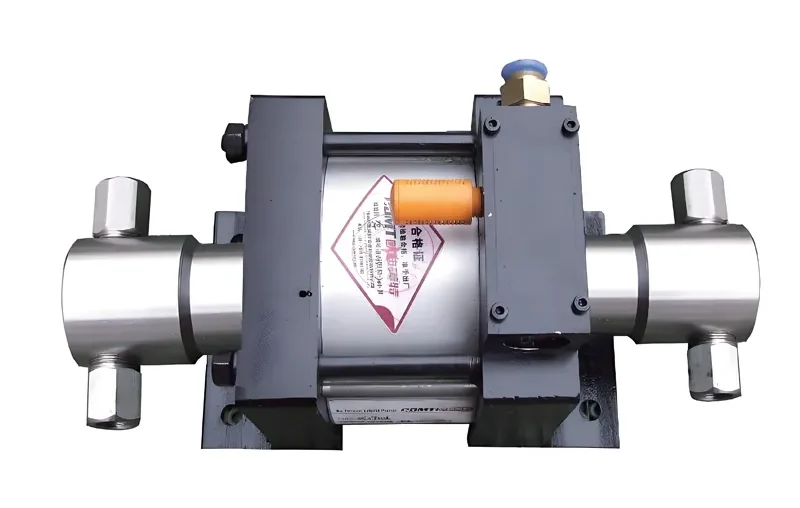
What Actually Determines Hydrostatic Test Pump Price?
1. Maximum Test Pressure and Pump Ratio
Pressure-boosting pumps reach higher output pressures through internal pressure ratios, piston areas, sealing arrangements, and stage configurations.
Pneumatic hydraulic pump series used for high-pressure testing may provide outputs ranging from relatively moderate test pressures to approximately 600 MPa, depending on the model and operating conditions.
Higher pump ratios may require:
- More precise internal machining
- Tighter sealing tolerances
- Higher-grade sealing materials
- Stronger pressure-bearing components
- More careful assembly and inspection
- Additional pressure-control components
However, maximum pressure should not be evaluated independently.
A buyer should also confirm:
- Required flow at the target pressure
- Whether the pressure is continuous or momentary
- Pressure-holding duration
- Number of tests per hour
- Expected cycle life
- Required pressure stability
- Test-piece internal volume
A pump that can theoretically reach the required pressure may still be unsuitable if its flow or duty cycle cannot support the actual testing process.
2. Drive Type
Drive type is another major cost factor. The three common configurations are manual, pneumatic, and electric.
Manual hydrostatic test pump
A manual hydrostatic test pump is generally the simplest configuration. It is commonly used for occasional testing, maintenance work, small components, and applications where automatic cycling is unnecessary.
A manual pressure test pump may offer:
- Lower initial equipment complexity
- No requirement for compressed air
- No motor or electrical control cabinet
- Straightforward maintenance
- Easy portability
However, manual operation depends more heavily on the operator and may be less suitable for high-frequency production testing.
Pneumatic hydrostatic test pump
A pneumatic hydrostatic test pump uses compressed air to drive the hydraulic section.
This type of air driven hydrotest pump is often selected for repeated pressure testing, hazardous environments, on-site maintenance, and facilities where compressed air is readily available.
Advantages may include:
- No electric motor at the pump
- Automatic stopping when pressure balance is reached
- Restarting when output pressure drops
- Adjustable output through drive-air regulation
- Suitability for repeated industrial testing
- Easier integration into pressure test systems
The buyer must distinguish drive pressure from output test pressure.
For some pneumatic hydraulic pump models, drive-air input may be approximately 0.1–0.8 MPa, while the test-output pressure can be many times higher. Confusing these two values is a common error when comparing quotations.
Electric hydrostatic test pump
An electric hydrostatic test pump uses an electric motor and pumping assembly to generate test pressure.
An electric pressure test pump may be suitable for:
- Workshop testing
- Production-line testing
- Repeated pressure cycles
- Automated pressure control
- Sites without a suitable compressed-air supply
- Applications requiring integration with PLC systems
Electric configurations usually require additional consideration of motor power, electrical standards, voltage, frequency, wiring, control components, overload protection, and automation requirements.
Neither pneumatic nor electric drive is automatically cheaper. The more economical choice depends on the customer’s infrastructure, testing frequency, automation requirements, and operating environment.
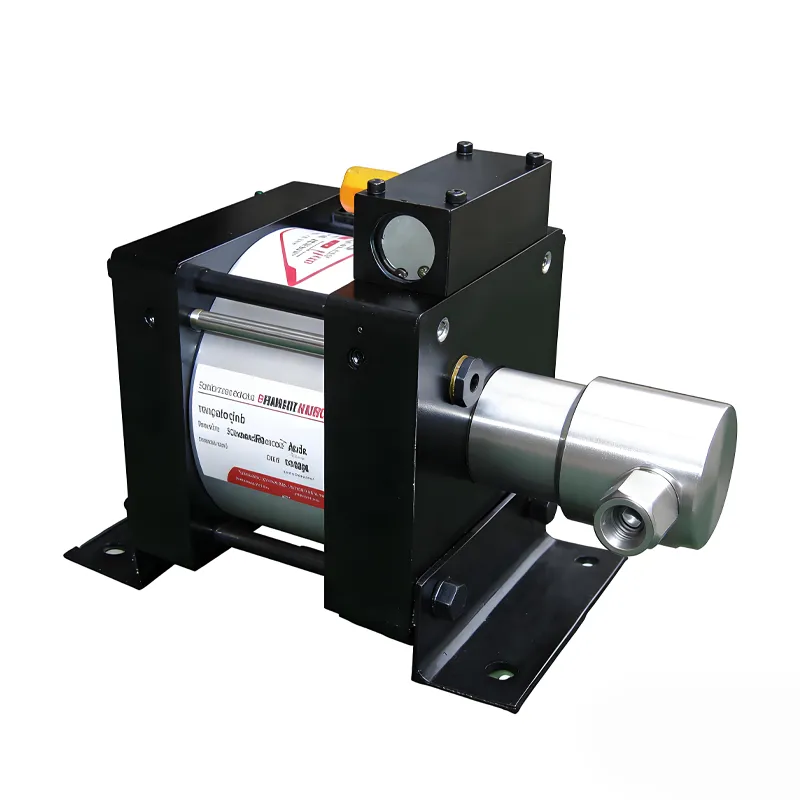
How Does the Test Medium Affect the Cost?
Water, hydraulic oil, glycol mixtures, and chemical process fluids require different materials and sealing configurations.
A pump quoted for clean-water service may not be suitable for:
- Corrosive chemicals
- High-viscosity fluids
- Contaminated process media
- Oxygen-sensitive applications
- High-temperature fluids
- Media requiring special cleanliness
The selected test medium can affect:
- Pump-body material
- Wetted-component material
- Seal composition
- Tubing and fitting material
- Valve selection
- Cleaning requirements
- Contamination control
- Maintenance frequency
Two pumps with the same pressure rating may therefore have different prices if one uses standard wetted materials while the other requires stainless steel, chemical-resistant seals, or specially cleaned components.
Customers should identify the exact medium before requesting a quotation. Describing the application only as “water testing” or “chemical testing” may not provide enough information for accurate equipment selection.
Projects involving corrosive media, unusual sealing materials, non-standard connections, or special working conditions can be evaluated through Highlight’s custom pressure testing system service. The available customization scope includes pressure, structure, port type, material, actuation, and system configuration.
How Does Control and Automation Change the Price?
A basic pump and a complete automated pressure testing system are not equivalent products.
Control options can range from a manual gauge and hand-operated valves to a fully integrated PLC/HMI system with automatic pressure cycling and data recording.
Manual control
A basic configuration may include:
- Pump
- Đồng hồ đo áp suất
- Manual isolation valves
- Pressure-release valve
- Basic hoses or tubing
This arrangement can be suitable for occasional tests where the operator manually increases pressure, observes the gauge, records the result, and releases pressure.
Semi-automatic control
A semi-automatic system may add:
- Pressure regulator
- Pressure sensor
- Automatic stop function
- Timed pressure holding
- Basic pressure alarms
- Controlled depressurization
This reduces operator involvement but may not include full data-management capability.
PLC/HMI control
A fully automated pressure test system may include:
- Điều khiển PLC
- HMI touchscreen
- Electronic pressure sensors
- Automatic pressurization
- Pressure-ramp control
- Pressure-hold timing
- Automatic pressure-drop judgment
- Test-cycle programming
- Data storage
- Pressure-time curves
- Report generation
- Operator identification
- Remote technical diagnosis
These functions add sensors, control hardware, electrical components, software development, system integration, calibration, and commissioning time.
Therefore, comparing the price of a bare pump with the price of an automated pressure testing machine is not meaningful unless both quotations include the same functional scope.
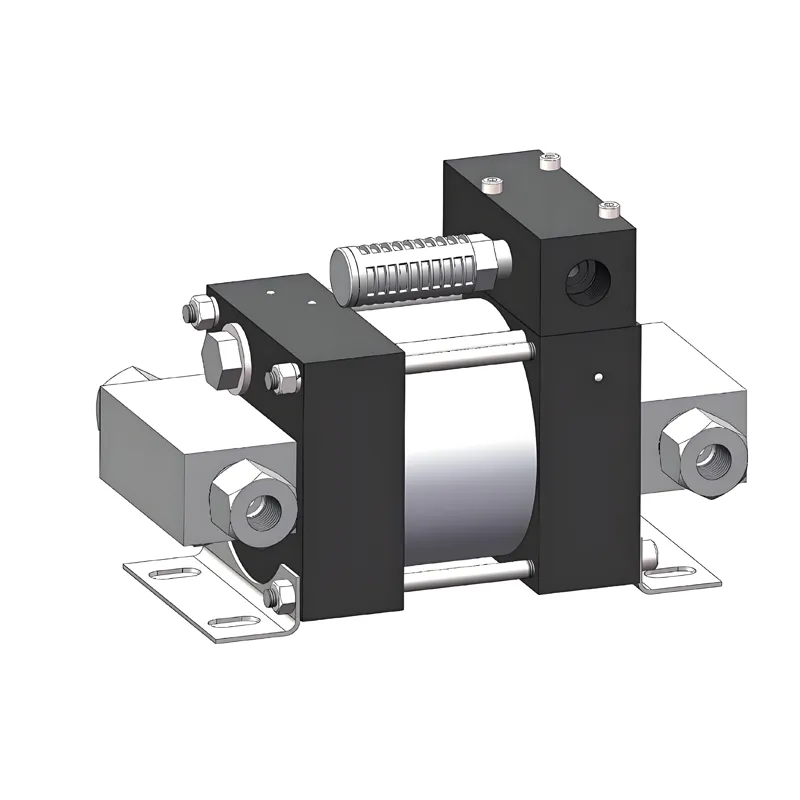
How Does Duty Cycle Affect Pump Selection?
Duty cycle describes how frequently and how long the pump is expected to operate.
A pump used for one or two maintenance tests per week has very different requirements from a pump operating throughout multiple production shifts.
Buyers should specify whether the application involves:
- Occasional maintenance testing
- Daily workshop testing
- Repeated production-line testing
- Continuous pressure cycling
- Long pressure-holding periods
- Burst or proof testing
- High-volume component inspection
Higher-duty applications may require:
- More durable seals
- Improved cooling or heat management
- Larger reservoirs
- Higher-flow components
- More robust valves and fittings
- Preventive-maintenance planning
- Easier service access
- Redundant safety protection
A lower-cost pump selected for occasional testing may experience excessive wear if used continuously. The lowest initial price can therefore produce a higher long-term operating cost.
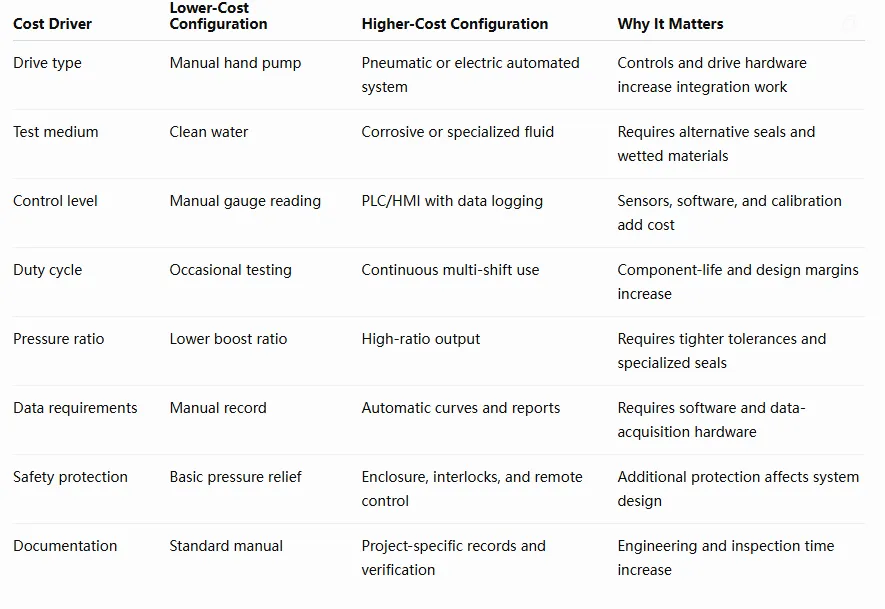
Why Can Hydro Test Pump Price Vary Between Suppliers?
A quoted hydro test pump price may describe very different scopes of supply.
One quotation may include only the pump body. Another may include:
- Drive-air regulator
- Pressure gauges
- Reservoir
- Filters
- High-pressure valves
- Tubing
- Fittings
- Safety relief devices
- Control cabinet
- Data acquisition
- Protective enclosure
- Installation support
- Operator training
- Spare seals
A lower number may therefore reflect fewer included components rather than a more competitive complete solution.
When comparing suppliers, buyers should request an itemized configuration and confirm:
- What components are included?
- What pressure and flow are guaranteed?
- What test medium is permitted?
- What duty cycle is supported?
- What controls are included?
- Is calibration included?
- Are hoses, fittings, and fixtures included?
- What documentation is supplied?
- What warranty and technical support are provided?
- Is commissioning included or quoted separately?
A meaningful price comparison requires equivalent technical configurations.
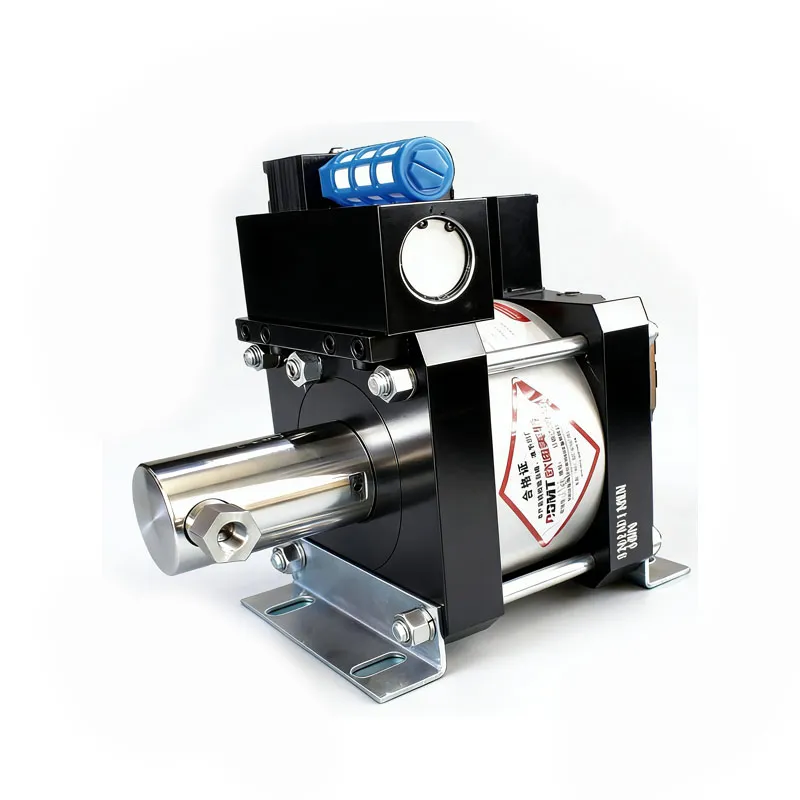
What Should Buyers Know About a Hydrostatic Test Pump for Sale?
A listing advertising a hydrostatic test pump for sale may be useful for identifying general product types, but it rarely contains enough information to confirm whether the pump is suitable for a specific project.
Before purchasing, buyers should verify:
- Maximum output pressure
- Output flow at working pressure
- Loại ổ đĩa
- Test medium compatibility
- Seal material
- Inlet conditions
- Connection size
- Pressure gauge range
- Relief-valve configuration
- Duty cycle
- Operating temperature
- Control method
- Required accessories
- After-sales support
A catalog model may be suitable for a standard application. However, a pressure-testing project involving unusual media, continuous operation, automatic cycling, special fixtures, or traceable reports may require an engineered system rather than an off-the-shelf pump.
Buyer Qualification Framework: What Should Be Ready Before Requesting a Quote?
Preparing the following information shortens the quotation cycle and helps suppliers provide comparable proposals.
1. Required maximum test pressure
Clarify whether the pressure is:
- Normal working pressure
- Maximum continuous pressure
- Proof-test pressure
- Burst-test target
- Short-duration peak pressure
2. Required flow
Maximum pressure without flow information is not enough. Provide the desired pressurization time, test-piece volume, and acceptable test-cycle duration.
3. Test medium
Specify whether the pump will handle:
- Clean water
- Dầu thủy lực
- Glycol mixture
- Chemical fluid
- Another defined liquid
Include concentration, temperature, viscosity, and corrosiveness where relevant.
4. Drive preference
Confirm whether the application needs:
- Manual operation
- Pneumatic drive
- Electric drive
Also identify whether compressed air and electrical power are available at the installation site.
5. Duty cycle
Provide the expected:
- Tests per hour
- Operating hours per day
- Pressure-hold duration
- Number of production shifts
- Required service life
6. Control requirements
State whether the equipment needs:
- Manual valves
- Automatic pressure control
- Pressure-hold timing
- Repeated cycling
- Data storage
- Pressure curves
- Automatic reports
- Remote operation
7. Applicable standards
Provide any customer specification, inspection procedure, industry standard, or documentation requirement that affects the equipment design.
8. Installation environment
Confirm whether the system will operate:
- In a fixed workshop
- On a mobile service platform
- Outdoors
- In a hazardous area
- In a clean environment
- On a production line
A supplier working under a documented quality-management system should review these factors before providing a final quotation.
If a quotation contains only a pressure value and a price, without addressing the medium, drive method, flow, duty cycle, and control level, it is likely based on a generic catalog configuration rather than the customer’s actual application.
How Should Buyers Compare a Hydraulic Test Pump and a Complete System?
A hydraulic pump is only one part of the testing process.
Depending on the application, a complete pressure test pump package may also require:
- Liquid reservoir
- Filter
- Pressure regulator
- High-pressure valves
- Relief valve
- Pressure sensors
- Reference gauge
- Test fixture
- Protective enclosure
- Control cabinet
- Data system
- Drainage or fluid-recovery arrangement
Buyers should decide whether they need:
- A standalone pump
- A pump with basic controls
- A portable testing unit
- A skid-mounted pressure source
- A complete automated pressure test system
This distinction has a major effect on the final project price.
Frequently Asked Questions
Can You Give a Fixed Hydrostatic Test Pump Price?
Pricing depends on the model, pressure, flow, medium, drive type, duty cycle, control level, accessories, and applicable project requirements.
A configuration-based quotation is more accurate than a universal published price list.
Is a Pneumatic-Driven Pump Cheaper Than an Electric Pump?
Not consistently.Pneumatic drive removes the need for a pump motor but requires compressed-air infrastructure. Electric drive adds motor and electrical components but may simplify integration with automatic controls.
The more economical option depends on site utilities, operating frequency, automation, and maintenance preferences.
Does a Higher Pressure Rating Always Cost More?
No.Duty cycle, flow requirement, automation level, medium compatibility, component quality, and documentation requirements may affect cost more than maximum pressure alone.
What Is the Difference Between Drive Pressure and Test Pressure?
Drive pressure is the input pressure used to operate a pneumatic pump. Test pressure is the high-pressure output delivered to the tested component.
For example, certain pneumatic pump models may use approximately 0.1–0.8 MPa drive pressure while generating a much higher hydraulic output.
Is a Manual Pump Suitable for Production Testing?
A manual pump can be suitable for occasional, low-volume testing. It is generally less suitable for repeated production cycles requiring consistent pressure ramps, automatic timing, and data recording.
What Is Included in a Testing Pump Price?
A testing pump price may refer only to the pump or to a complete package. Buyers should confirm whether gauges, regulators, reservoirs, valves, hoses, fittings, controls, safety devices, and technical support are included.
How Can I Receive an Accurate Quotation?
Provide the required pressure, flow, test medium, test-piece volume, drive preference, duty cycle, control requirements, applicable standards, and installation conditions.
This allows the supplier to recommend a suitable pump rather than quoting a generic catalog model.
Kết luận
Hydrostatic test pump cost is not determined by brand or maximum pressure alone.
The main price drivers are:
- Maximum test pressure and pump ratio
- Required flow
- Manual, pneumatic, or electric drive
- Test-medium compatibility
- Control and automation level
- Duty cycle
- Safety requirements
- Documentation and standards
- Included accessories and service scope
A reliable quotation should explain how the proposed configuration addresses each of these factors.
Buyers comparing a manual hydrostatic test pump, pneumatic hydrostatic test pump, electric hydrostatic test pump, or high pressure test pump should request complete technical specifications rather than comparing one headline pressure number.
The most accurate price comes from matching the pump to the real application—not selecting the cheapest listing.
Contact Highlight with your test pressure, flow, medium, duty cycle, and control requirements to request a configuration-based quotation.
 English
 Français
 Русский
 Español
 Português
 العربية
 Tiếng Việt
 한국어
한국어 Bahasa Indonesia
 Deutsch
 Türkçe
 Italiano