



Safety valves are critical protection devices used in pressure vessels, pipelines, storage systems, and industrial equipment. Their opening pressure, sealing performance, and operational reliability directly affect the safety of production processes.
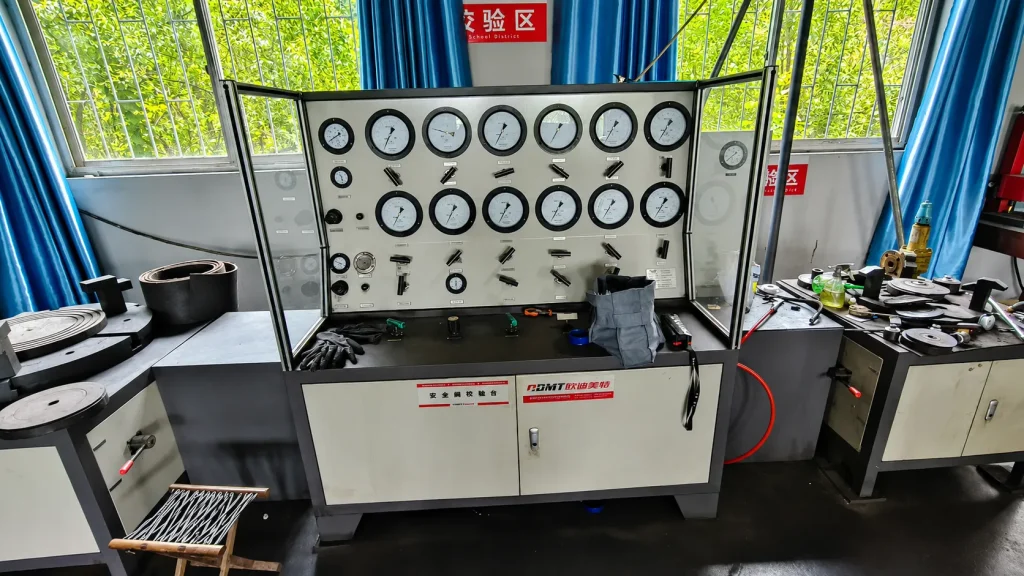
Recently, Highlight completed the upgrade project of a customized Manual Control Safety Valve Test Bench for a customer in Zhanhua. The modification focused on improving the equipment’s testing performance, operational stability, and adaptability to the customer’s existing safety valve inspection requirements.
Through targeted engineering optimization, the upgraded safety valve test bench provides a more reliable platform for manual testing, pressure adjustment, sealing inspection, and maintenance verification of different types of safety valves.
This project demonstrates Highlight’s capability in providing customized valve testing equipment, upgrading existing test systems, and delivering practical pressure testing solutions according to real industrial requirements.
Why Was the Safety Valve Test Bench Upgraded?
Industrial safety valves often operate under demanding conditions, including high pressure, temperature changes, vibration, and long operating cycles. Over time, testing equipment may require improvements to maintain accurate inspection results and improve operator efficiency.
The Zhanhua upgrade project was carried out to optimize the existing manual safety valve test bench and enhance its practical performance.
The main objectives included:
- Improving testing reliability
- Enhancing pressure adjustment accuracy
- Optimizing manual operation procedures
- Increasing equipment stability
- Improving maintenance convenience
- Extending the service life of existing equipment
- Supporting more efficient safety valve inspection
Instead of replacing the entire system, upgrading the existing safety valve testing machine allowed the customer to improve performance while reducing investment costs and minimizing downtime.
This approach is especially valuable for companies that already own industrial testing equipment but require modernization to meet updated production or inspection requirements.
What Is a Manual Control Safety Valve Test Bench?
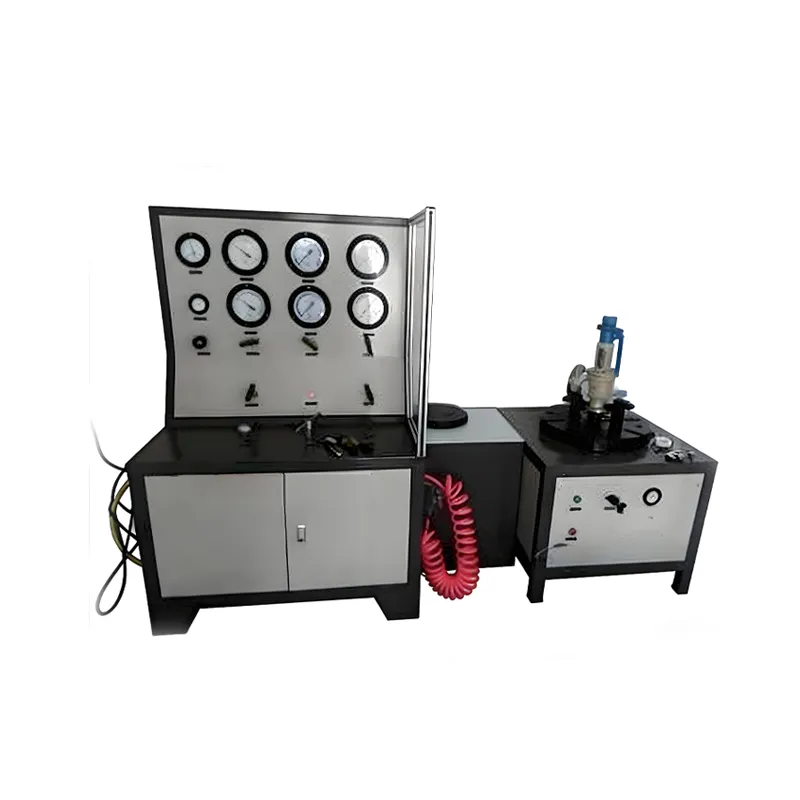
A Manuelle Testbank für Sicherheitsventile is a specialized testing system designed to evaluate the performance of safety valves through manually controlled pressure generation, adjustment, and measurement.
Unlike fully automated systems, manual-control configurations allow operators to directly manage testing procedures through valves, regulators, pressure gauges, and mechanical controls.
A typical manual PSV test bench may include:
- Pressure generation system
- Test fixture assembly
- Pressure gauges
- Control valves
- Pressure regulation components
- Safety protection devices
- Hydraulic or pneumatic circuits
- Manual operating panel
The equipment is commonly used for:
- Kalibrierung des Sicherheitsventils
- Opening pressure testing
- Leakage inspection
- Reseating pressure verification
- Pressure holding tests
- Maintenance inspection
- Repair verification
For customers who do not require automatic data acquisition or PLC control, a manual configuration provides a practical and cost-effective testing solution.
What Safety Valves Can Be Tested?
The upgraded safety valve test bench can be configured for different types of pressure protection devices depending on customer requirements.
Typische Anwendungen sind:
Pressure Safety Valve (PSV) Testing
A PSV is designed to automatically release excessive pressure when a system exceeds its safe operating limit.
A PSV test bench allows technicians to verify:
- Set pressure
- Opening response
- Leakage performance
- Closing behavior
- Pressure stability
Accurate PSV testing helps ensure that safety valves perform correctly during abnormal pressure conditions.
Pressure Relief Valve Testing
Pressure relief valves are widely used in:
- Oil and gas systems
- Chemical plants
- Power generation facilities
- Pressure vessels
- Industrial pipelines
A dedicated pressure relief valve test bench helps verify valve performance before installation or after maintenance.
Testing may include:
- Pressure adjustment
- Seat tightness testing
- Functional verification
- Repair acceptance testing
Safety Relief Valve Testing
Safety relief valves combine pressure relief and safety protection functions.
A customized safety relief valve test bench can support different valve sizes, pressure ranges, and connection standards.
Depending on the application, the system may be configured for:
- Gas testing
- Liquid testing
- Hydraulic testing
- Pneumatic testing
What Improvements Were Made During the Upgrade?
The Zhanhua project focused on improving the existing system rather than simply replacing components.
Typical upgrade items for a manual control valve test bench may include:
Improved Pressure Control
Accurate pressure control is essential for safety valve testing.
The upgraded system improves:
- Pressure adjustment stability
- Pressure observation accuracy
- Operator control response
- Testing repeatability
- Optimized Testing Circuit
The internal pressure circuit was reviewed and improved according to testing requirements.
Optimization may involve:
- Pipeline layout improvement
- Valve arrangement adjustment
- Connection reliability improvement
- Reduced pressure loss
- Easier maintenance access
Enhanced Operating Convenience
Manual testing requires clear and reliable operation.
The upgraded control structure improves:
- Gauge visibility
- Valve identification
- Ablauffolge
- Daily maintenance efficiency
This allows operators to perform testing procedures more efficiently.
Extended Equipment Service Life
By replacing aging components and optimizing key structures, the upgrade helps extend the working life of the existing equipment.
Benefits include:
- Reduced maintenance frequency
- Improved reliability
- Lower replacement costs
- Better long-term return on investment
Why Choose a Manual Safety Valve Test Bench?
Although automated testing systems provide advanced functions, manual systems remain widely used in many industrial environments.
A manual safety valve test bench offers several advantages:
Lower Investment Cost
Compared with fully automatic systems, manual configurations generally require fewer electronic components and software systems.
This makes them suitable for:
- Maintenance workshops
- Small inspection departments
- Valve repair centers
- Industrial service companies
Simple Operation and Maintenance
Manual systems have fewer electronic components, making troubleshooting and maintenance easier.
Operators can directly observe:
- Pressure changes
- Valve response
- Leakage conditions
- Test process
Flexible Application
A manual valve test bench can be customized according to:
- Ventilgröße
- Druckbereich
- Testmedium
- Connection standard
- Workshop conditions
Suitable for Repair and Calibration
Many valve service companies require reliable equipment for:
- Before-installation inspection
- After-repair verification
- Periodic maintenance testing
- Calibration support
A customized manual system can efficiently support these tasks.
How Does a Safety Valve Test Bench Improve Industrial Safety?
Safety valves are often the final protection barrier against dangerous overpressure situations.
Regular testing helps identify:
- Incorrect opening pressure
- Leakage problems
- Spring fatigue
- Valve sticking
- Poor sealing performance
- Calibration deviation
A reliable safety valve testing equipment system helps companies maintain:
- Equipment safety
- Production continuity
- Regulatory compliance
- Maintenance records
- Operational confidence
Industries commonly using safety valve testing equipment include:
- Petroleum
- Chemical processing
- Power generation
- Marine engineering
- Pressure vessel manufacturing
- Natural gas systems
- Industrial equipment maintenance
Safety Valve Test Bench Customization Options
Different customers have different valve-testing requirements.
Highlight provides customized valve test bench solutions according to:
Valve Parameters
Including:
- Valve diameter
- Pressure rating
- Connection type
- Valve structure
- Testmedium
Testing Requirements
Including:
- Opening pressure testing
- Dichtheitsprüfung
- Pressure holding
- Seat tightness testing
- Calibration verification
Control Configuration
Options may include:
- Manual control
- Semi-automatic control
- PLC/HMI control
- Data recording system
Workshop Conditions
Engineering design can consider:
- Available space
- Stromversorgung
- Luftzufuhr
- Operating environment
- Maintenance requirements
Through customization, customers can obtain equipment that matches their actual inspection workflow.
Highlight’s Valve Testing Equipment Capability
Highlight specializes in customized industrial pressure testing solutions, including:
- Prüfstand für Sicherheitsventile
- PSV-Prüfstand
- Prüfstand für Überdruckventile
- Ventilprüfstand
- Hydrostatic test bench
- Leak test machine
- Pressure testing equipment
- Customized pressure test systems
With engineering experience in high-pressure testing applications, Highlight supports customers from:
- Requirement analysis
- Equipment design
- Manufacturing
- Testing
- Installation guidance
- Technical support
The company focuses on providing reliable testing solutions for valves, pressure components, tanks, and industrial equipment.
Frequently Asked Questions
Was ist ein Prüfstand für manuell betätigte Sicherheitsventile?
A Manual Control Safety Valve Test Bench is equipment used to manually test safety valves by controlling pressure generation, adjustment, and measurement processes.
What is the difference between a PSV test bench and a safety valve test bench?
A PSV test bench focuses specifically on pressure safety valves, while a safety valve test bench is a broader term covering different pressure protection valves.
Can an existing safety valve test bench be upgraded?
Yes. Existing systems can often be upgraded through improvements to pressure circuits, control components, fixtures, measurement systems, and operating structures.
Is a manual safety valve test bench suitable for industrial applications?
Yes. Manual systems are widely used in valve maintenance workshops, repair centers, and inspection departments where automatic data recording is not required.
 English
 Français
 Русский
 Español
 Português
 العربية
 Tiếng Việt
 한국어
한국어 Bahasa Indonesia
 Deutsch
 Türkçe
 Italiano