



Для petroleum storage tanks, a breathing valve is not just a small accessory installed on the tank roof. It is a critical safety component that helps control tank pressure, reduce vapor loss, protect the storage system, and support safer operation in oil depots, petrochemical plants, fuel storage terminals, and tank maintenance stations.
Недавно, Выделите provided professional training for a portable explosion-proof breathing valve testing solution used in petroleum storage tank maintenance. The training focused on practical operation, safe testing procedures, pressure and vacuum calibration, sealing inspection, and daily maintenance of the portable test equipment.
The goal was clear: help the customer’s technical team understand how to use the equipment correctly, improve on-site inspection efficiency, and ensure that breathing valves can be tested safely and accurately before being returned to service.
What Is a Petroleum Storage Tank Breathing Valve?
A petroleum storage tank breathing valve, also known as a pressure vacuum valve, PV valve, or breather valve, is designed to protect atmospheric and low-pressure storage tanks from excessive internal pressure or vacuum.
During tank filling, liquid inflow may increase internal pressure. During discharge, temperature changes, or vapor contraction, vacuum may occur inside the tank. If this pressure or vacuum is not controlled properly, the tank may face deformation, vapor leakage, safety risks, or environmental compliance issues.A breathing valve helps release excess pressure or admit air when needed, allowing the tank to “breathe” within a controlled pressure range.
For this reason, regular inspection and calibration are essential. A valve that opens too early may cause unnecessary vapor loss. A valve that opens too late may create dangerous pressure conditions. A valve that leaks may affect safety, environmental control, and product storage quality.
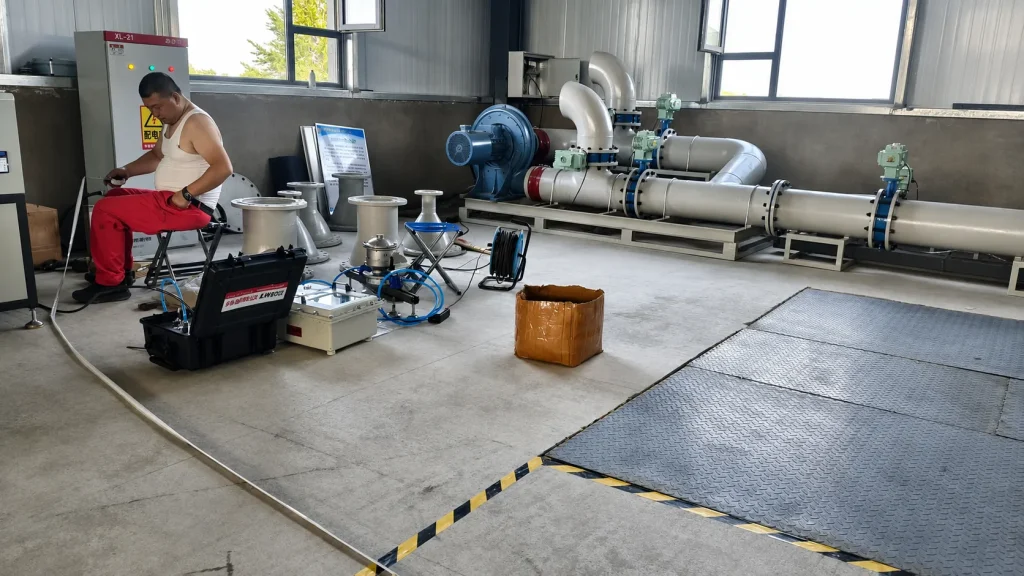
Why Portable Explosion-Proof Testing Equipment Matters
Traditional valve inspection often requires removing the valve from the site and sending it to a workshop or third-party testing center. This can lead to longer downtime, higher labor cost, and delayed maintenance schedules.
A portable explosion-proof breathing valve test bench allows technicians to perform inspection, pressure setting verification, vacuum setting verification, and sealing tests closer to the working site. For oil depots and petroleum storage facilities, this is highly valuable because many valves are installed in large quantities across different tanks.
The portable design improves field service flexibility, while the explosion-proof configuration is important for petroleum-related environments where flammable vapor may exist.
Training Focus: From Equipment Setup to Practical Operation
During the training, Highlight engineers worked with the customer’s team to explain both the equipment structure and the testing logic behind the system.
The training covered the following main areas:
- Equipment connection and installation
- Test fixture and sealing interface preparation
- Breathing valve disassembly and inspection
- Pressure test procedure
- Vacuum test procedure
- Sealing performance verification
- Explosion-proof operation precautions
- Data reading and result judgment
- Daily maintenance of the portable test bench
- Common troubleshooting during field testing
This type of training is especially important because breathing valve testing is not only about reaching a pressure value. Operators must understand the valve’s working principle, sealing behavior, response characteristics, and safe operation boundaries.
How the Training Was Conducted
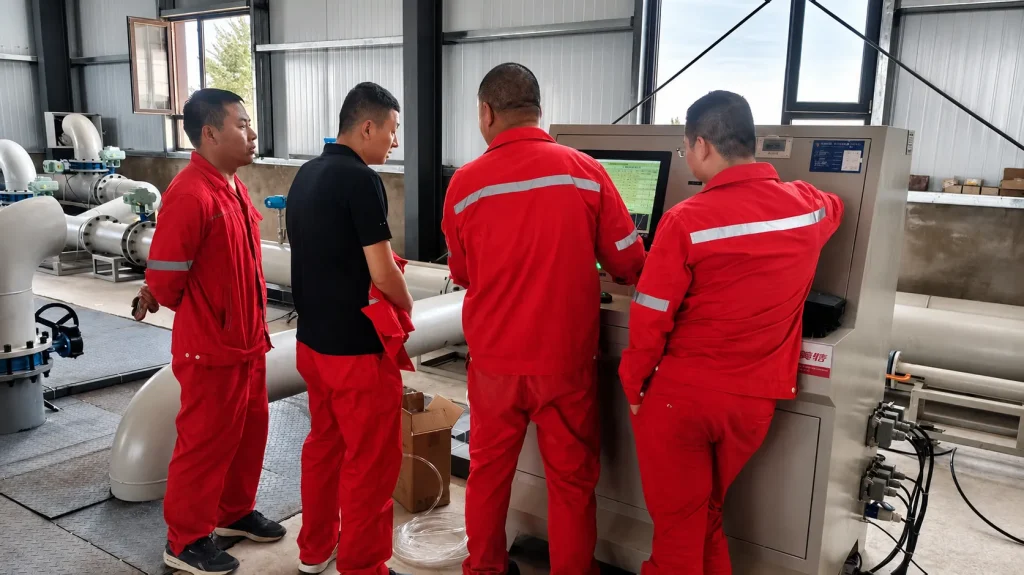
The training was arranged in a practical working environment. Highlight engineers guided the customer’s operators through equipment preparation, valve handling, test connection, and step-by-step operation.
In the first stage, the team checked the portable test equipment, air supply connection, control elements, sealing tools, and testing accessories. This ensured that the operators understood the function of each component before starting formal testing.
In the second stage, the breathing valve structure was explained. The team discussed the valve body, valve disc, sealing surface, pressure side, vacuum side, and key components that may affect test accuracy.
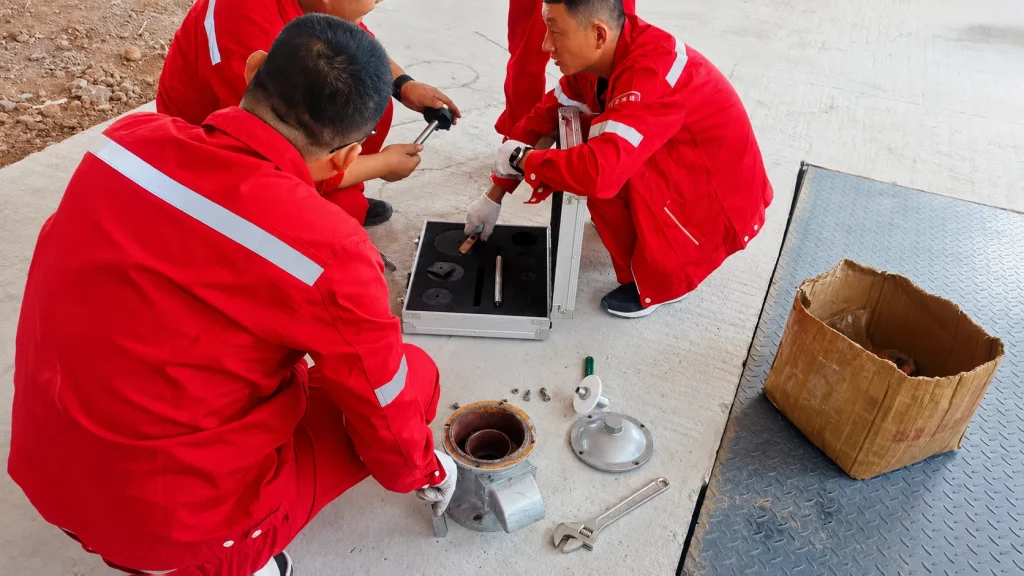
In the third stage, operators performed hands-on practice under engineering guidance. This included placing the valve on the test interface, confirming sealing conditions, gradually increasing pressure or vacuum, observing valve opening behavior, and judging whether the test result met the required setting range.
The final stage focused on troubleshooting. Engineers explained how to identify common issues such as unstable pressure, poor sealing, abnormal valve opening, incorrect connection, damaged sealing surfaces, or improper fixture positioning.
What Problems Can Breathing Valve Testing Help Prevent?
Для petroleum storage tank operators, breathing valve failure can lead to serious maintenance and safety concerns.
A regular testing program can help prevent:
- Excessive tank pressure caused by delayed valve opening
- Excessive vacuum caused by blocked or failed valve response
- Vapor leakage due to poor sealing
- Incorrect pressure or vacuum setting after long-term use
- Corrosion, contamination, or mechanical sticking
- Unsafe operation caused by unverified tank accessories
- Maintenance delays caused by lack of on-site testing capability
A portable breathing valve test bench gives maintenance teams a practical tool to verify valve performance before installation or after periodic inspection.
Why Training Is as Important as the Test Equipment
Even high-quality testing equipment cannot deliver reliable results if operators do not use it correctly. In real industrial environments, inaccurate testing often comes from improper installation, unstable sealing, fast pressure loading, incorrect reading methods, or lack of understanding of the valve structure.
That is why Highlight provides not only equipment, but also technical training and operation guidance.
Through training, customer teams can better understand:
- How to select the correct test interface
- How to avoid false leakage caused by poor sealing
- How to control pressure increase speed
- How to judge the actual valve opening point
- How to repeat the test for confirmation
- How to maintain the equipment after use
- How to improve safety during petroleum tank accessory testing
For oil depots, petrochemical plants, and maintenance companies, this can reduce operator errors and improve long-term test reliability.
Highlight’s Engineering Value for Tank Accessory Testing
Выделите is not only a supplier of standard test equipment. The company focuses on high-pressure testing equipment, gas booster systems, valve test benches, safety valve test benches, and customized fluid control systems.
For petroleum tank accessory testing, Highlight can provide engineering support based on:
- Valve type
- Test pressure range
- Vacuum range
- Испытательная среда
- Explosion-proof requirements
- Fixture design
- Portable or fixed installation
- Manual, semi-automatic, or PLC control
- Data recording requirements
- Field operation environment
This makes the equipment more suitable for real maintenance conditions rather than only laboratory use.
How to Choose a Portable Breathing Valve Test Bench
When selecting a breathing valve test bench, buyers should not only compare price. A suitable system should match the actual testing requirements of the facility.
Before purchasing, customers should confirm:
- Valve type
Is it a pressure valve, vacuum valve, combined PV valve, or special tank accessory? - Valve size and connection
What flange size, sealing structure, and installation interface are required? - Pressure and vacuum range
What are the required opening pressure, vacuum setting, and sealing test range? - Testing environment
Will the equipment be used in a workshop, oil depot, hazardous area, or mobile service condition? - Explosion-proof requirement
Does the working environment require explosion-proof electrical components or pneumatic control design? - Operation method
Does the customer need manual control, digital display, PLC control, or test data recording? - Mobility
Should the equipment be portable, trolley-mounted, skid-mounted, or fixed in a maintenance workshop?
Выделите can provide technical recommendations according to these requirements before quotation.
ЧАСТО ЗАДАВАЕМЫЕ ВОПРОСЫ
What is a breathing valve on a petroleum storage tank?
A breathing valve, also called a pressure vacuum valve or PV valve, helps control pressure and vacuum inside a storage tank. It protects the tank from excessive pressure or vacuum during filling, discharge, temperature changes, or vapor movement.
Why does a breathing valve need regular testing?
Regular testing helps confirm whether the valve opens at the correct pressure or vacuum setting and whether the sealing performance is reliable. This supports safer tank operation and reduces vapor leakage risk.
What is a portable breathing valve test bench?
A portable breathing valve test bench is a mobile testing device used to inspect and calibrate tank breathing valves. It can support pressure testing, vacuum testing, sealing inspection, and on-site maintenance work.
Why is explosion-proof design important?
Petroleum storage environments may contain flammable vapor. Explosion-proof design helps improve operational safety when equipment is used in oil depots, petrochemical plants, and fuel storage areas.
Can Highlight customize breathing valve test equipment?
Yes. Highlight can customize test equipment according to valve size, pressure range, vacuum range, test medium, control method, fixture design, portability requirements, and customer working conditions.
 English
 Français
 Русский
 Español
 Português
 العربية
 Tiếng Việt
 한국어
한국어 Bahasa Indonesia
 Deutsch
 Türkçe
 Italiano