



تعد المعايرة الموثوقة لصمامات الأمان أمرًا ضروريًا في صناعة السفن، والهندسة البحرية، وصيانة السفن، وفحص المعدات البحرية. فعندما يتعذر على صمام الأمان أن يفتح عند الضغط المحدد أو أن يعود إلى وضعه الصحيح بعد تخفيف الضغط، قد تتأثر موثوقية نظام الضغط المحمي.
أكملت شركة «هايلايت» مؤخرًا أعمال التسليم الخاصة بمنصة اختبار معايرة صمامات الأمان غير المتصلة بالشبكة في حوض بناء السفن «رافلز». وقام فريق المشروع بمراجعة تكوين المعدات، وإجراءات التشغيل، ووظائف التحكم، ومؤشرات الضغط، وتثبيت الصمامات، وسير عمل المعايرة، ومتطلبات الصيانة الدورية.
سيُقدِّم منصة اختبار صمامات الأمان التي تم الانتهاء من إنشائها الدعم لموظفي الفحص والصيانة في حوض بناء السفن في إجراء اختبارات موحدة لصمامات الأمان في ظروف ورشة عمل خاضعة للرقابة.
ما الذي تم إنجازه في حوض بناء السفن «رافلز»؟
تضمن المشروع إجراء اختبار القبول الميداني لمرفق مخصص نظام اختبار ومعايرة صمامات الأمان في وضع عدم الاتصال بالإنترنت.
على عكس نظام الاختبار عبر الإنترنت، يتطلب منضدة المعايرة غير المتصلة بالإنترنت إزالة الصمام من الجهاز المحمي وتركيبه على جهاز اختبار خاضع للرقابة. ويمكن للمشغل بعد ذلك تطبيق ضغط الاختبار المطلوب وتقييم الصمام في ظروف ورشة عمل قابلة للتكرار.
ركزت أعمال الاستلام على الوظائف العملية اللازمة للفحص اليومي للصمامات، بما في ذلك:
فحص مظهر المعدات وتكوينها
- تشغيل لوحة التحكم
- التحقق من مصدر الضغط
- فحص مقياس الضغط والأجهزة
- تركيب الصمامات وتثبيتها
- تنظيم الضغط
- اختبار الضغط المحدد
- مراقبة ضغط إعادة التثبيت
- فحص الإحكام والتسرب
- تخفيف الضغط وإعادة ضبط النظام
- إجراءات التشغيل في حالات الطوارئ
- تدريب المشغلين والصيانة الدورية
يوضح هذا المشروع كيف يمكن لمنصة اختبار صمامات الأمان، عند تهيئتها بشكل صحيح، أن تساعد أحواض بناء السفن على إرساء عملية صيانة صمامات أكثر تنظيماً وقابلية للتكرار.
تشمل مجموعة اختبارات صمامات الأمان الأوسع نطاقًا التي تقدمها شركة «هايلايت» ما يلي: دليل, يتم التحكم فيه بواسطة الكمبيوتر, محمول, عبر الإنترنت, ، وأنظمة مخصصة لمختلف بيئات الفحص.
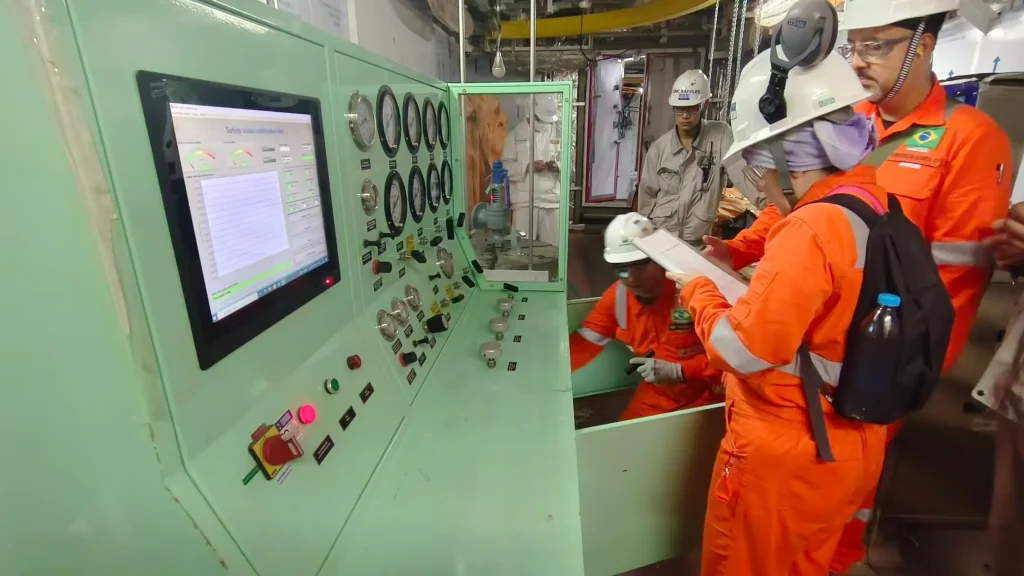
لماذا تحتاج أحواض بناء السفن إلى منضدة معايرة صمامات الأمان التي تعمل دون اتصال بالإنترنت؟
تحتوي السفن والمنشآت الهندسية البحرية على أنظمة ضغط قد تستخدم الهواء المضغوط أو البخار أو الغازات أو الوسائط الهيدروليكية أو السوائل المرتبطة بالوقود أو غيرها من وسائط العمليات. ويتم تركيب صمامات الأمان لحماية هذه الأنظمة من الضغط الزائد.
أثناء الصيانة، قد يتعين إزالة الصمام لأغراض التنظيف أو الإصلاح أو الفحص أو إعادة المعايرة. ويوفر منضدة اختبار صمامات الأمان (PSV) خارج خط الإنتاج بيئة خاضعة للرقابة يمكن للفنيين من خلالها تقييم أداء الصمام قبل إعادته إلى الخدمة.
بالنسبة لأحواض بناء السفن، يمكن أن يدعم منضدة العمل غير المتصلة بالإنترنت ما يلي:
- الصيانة المخطط لها للسفن
- إصلاح المنصات البحرية
- إصلاحات شاملة لنظام الضغط
- عمليات ورشة «فالفي»
- بناء سفن جديدة
- تشغيل المعدات
- عمليات الفحص الدورية للسلامة
- التحقق من الصمامات التي تم إصلاحها
- وثائق الصيانة
كما يمكن لهذه المعدات أن تقلل من الاعتماد على ترتيبات الاختبار المؤقتة، وتساعد الفنيين على اتباع إجراءات معايرة متسقة.
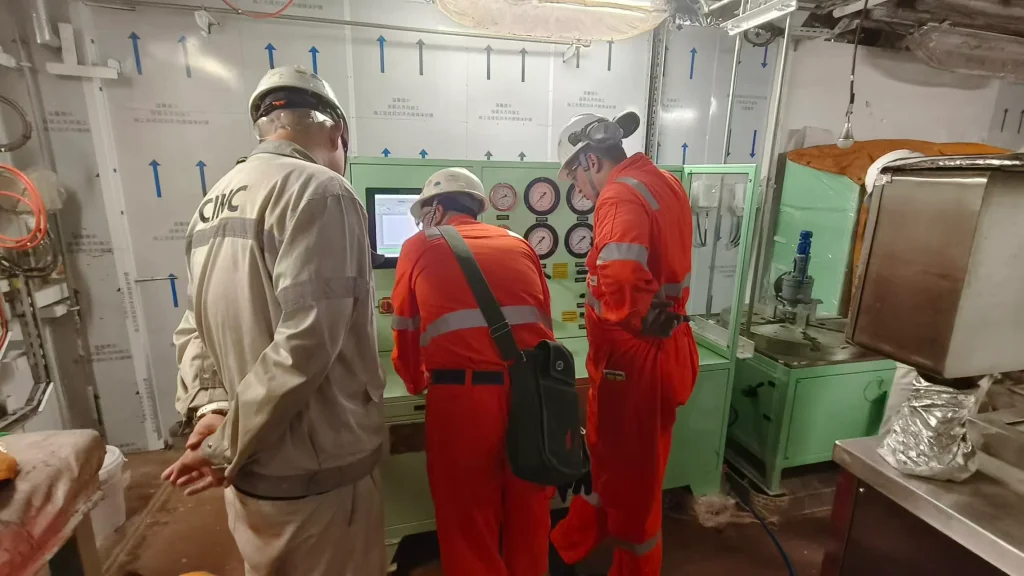
ما هو منضدة اختبار صمامات الأمان غير المتصلة بالشبكة؟
منصة اختبار صمامات الأمان خارج خط التشغيل هي نظام متخصص لاختبار الضغط يُستخدم لفحص صمام الأمان بعد إزالته من خط الأنابيب أو وعاء الضغط أو المرجل أو الضاغط أو أي معدات محمية أخرى.
يتم تثبيت الصمام على حامل مناسب وتوصيله بمصدر ضغط خاضع للتحكم. ثم يتم زيادة الضغط وفقًا لإجراءات الاختبار المطلوبة.
اعتمادًا على نوع الصمام وتكوين المشروع، يمكن استخدام النظام كـ:
- منصة اختبار صمامات الأمان
- منصة اختبار PSV
- منصة اختبار صمامات الأمان
- منصة اختبار صمامات الأمان الضغطية
- منصة اختبار صمامات التنفيس
- منصة اختبار صمامات تخفيف الضغط
- منصة اختبار معايرة PSV
- منضدة معايرة صمامات الأمان
- اختبار نظام صمام الأمان على منضدة الاختبار
- آلة اختبار صمامات الأمان في وضع عدم الاتصال بالإنترنت
تسليط الضوء على منصة اختبار صمامات الأمان ذات التحكم اليدوي وهي مصممة لإجراء اختبارات الضغط المحدد، وضغط إعادة الإغلاق، واختبارات محكّمة الإحكام لصمامات الأمان ذات التحميل المباشر والتشغيل التوجيهي.
ما هي اختبارات صمامات الأمان التي يمكن إجراؤها؟
The exact test procedure depends on the valve structure, applicable standard, test medium, pressure range, and the shipyard’s inspection requirements.
A professional safety valve testing equipment configuration may support several core checks.
اختبار الضغط المحدد
Set pressure is the pressure at which the safety valve begins to open under specified test conditions. The operator gradually increases the pressure while monitoring the valve response.
Accurate set-pressure verification helps determine whether the valve will operate at the intended protection point.
Reseating-pressure testing
After opening, the valve should close again as pressure decreases. Reseating pressure, sometimes described as setback pressure in equipment documentation, is an important indicator of valve performance.
Tightness and sealing testing
The valve seat and sealing surfaces can be checked for unacceptable leakage below the set pressure. A stable test source, suitable measurement instruments, and correct valve installation are important for obtaining repeatable results.
Opening-behavior observation
Depending on the test bench and valve structure, technicians may observe opening response, pressure stability, valve action, and repeatability.
ال منضدة اختبار صمام أمان التحكم بالكمبيوتر can automate pressurization, sensor monitoring, data recording, and report generation for inspection environments requiring greater traceability.
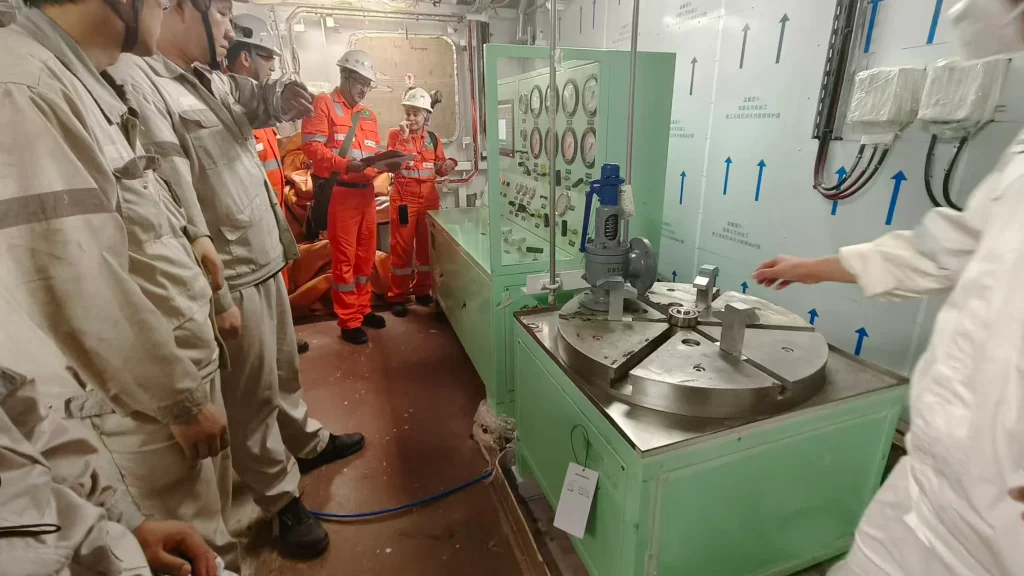
How Was the Test Bench Evaluated During Acceptance?
Acceptance is not limited to confirming that the equipment can generate pressure. The system must also be practical for the customer’s actual workshop operation.
During an offline safety valve test bench acceptance process, the project team pays attention to the complete testing workflow.
Valve mounting and clamping
The fixture should match the intended valve connection, size, and structure. The valve must be installed securely before pressure is applied.
Interchangeable fixtures may be required when one bench is used for several flange sizes or valve configurations.
تنظيم الضغط
The pressure source should allow controlled pressure increase, stable pressure holding, and safe depressurization. Sudden or poorly controlled pressurization can make calibration more difficult.
Instrument indication
Pressure gauges, sensors, and digital displays must be suitable for the intended test range. Operators should also understand which instrument is used for clamping pressure, test pressure, inlet pressure, and other system functions.
Operating sequence
The control sequence should be clear to trained personnel. Operators need to understand valve mounting, line selection, pressure application, result observation, pressure release, and fixture removal.
Safety protection
The system should include appropriate operating controls, pressure-release devices, protective structures, warning labels, and emergency procedures according to its configuration.
The test bench includes a centralized control console, multiple pressure instruments, operating valves, and a dedicated valve-clamping station.
What Is the Difference Between an Offline and Online Safety Valve Test Bench?
The main difference is whether the safety valve is removed from the operating system.
Offline safety valve test bench
For offline calibration, the valve is dismantled and taken to a workshop test bench.
This method is suitable when the valve needs:
- Cleaning
- Disassembly
- Seat repair
- Spring adjustment
- Internal inspection
- Complete workshop calibration
- اختبار التسرب
- Post-repair verification
It provides controlled testing conditions and allows technicians to inspect the valve more thoroughly.
Online safety valve test bench
و منضدة اختبار صمام الأمان عبر الإنترنت evaluates the valve while it remains installed on the pressure system.
Online testing can be useful when removing the valve would require a major shutdown or when the operator needs to verify opening behavior under in-service conditions.
Highlight’s online calibration system is intended for installed safety valves on boilers, pressure vessels, and pressure pipelines, with testing based on controlled supplementary force and valve-response measurement.
Offline and online systems are therefore complementary rather than interchangeable. Shipyards may use offline testing for workshop maintenance and online testing for selected in-service inspection tasks.
Why Is Controlled Pressure Generation Important?
A safety valve calibration bench requires a pressure source that can increase pressure smoothly and maintain stable output near the valve’s set point.
The appropriate pressure-generation method depends on:
- وسيط الاختبار
- Required test pressure
- Valve size
- Internal volume
- Required pressure-increase rate
- Test frequency
- Workshop air supply
- Cleanliness requirements
- متطلبات السلامة
Depending on the system design, an air-driven gas booster pump may be integrated to provide high-pressure gas for calibration. The test pressure source and clamping pressure source can be designed as independent circuits to improve operating control.
Highlight’s computer-controlled bench design combines pneumatic-hydraulic clamping with air-driven gas and liquid pressure sources for project-dependent safety valve testing.
For projects requiring a dedicated pressure source, customers can also review Highlight’s مضخة تقوية الغاز و نظام تعزيز الغاز options. These systems can be configured according to inlet pressure, target pressure, gas type, required flow, and operating frequency.
What Is the Role of the Valve Test Bench in Shipyard Maintenance?
A safety valve test bench is designed specifically for safety valves and pressure relief devices. A general منضدة اختبار الصمامات serves a different but related purpose.
General valve testing equipment may be used for:
- صمامات البوابة
- الصمامات الكروية
- صمامات كروية
- صمامات الفحص
- الصمامات الفراشية
- Industrial isolation valves
Common test items include hydrostatic shell-strength testing, seat sealing, high-pressure sealing, and low-pressure gas-tightness testing.
Industrial buyers may use terms such as:
- منصة اختبار الصمامات
- Valve bench test
- Valves test bench
- Valve testing machine
- Hydraulic valve test bench
- High pressure valve test bench
- Valve test rig
- Valve test stand
- منصة اختبار التسرب
Highlight’s valve test bench range supports different clamping structures and test modes for multiple industrial valve types, while the safety valve calibration range focuses on set pressure, reseating pressure, and sealing performance.
For a shipyard maintenance workshop, these two equipment categories can support different valve-inspection tasks without competing for the same function.
How Can Test Results Be Documented?
Test documentation requirements vary according to the customer, valve type, classification requirements, inspection procedure, and control configuration.
A manual safety valve test bench may rely primarily on operator observation and manually completed records. A PLC or computer-controlled system can provide additional data-management functions.
Depending on the selected configuration, a computerized pressure test system may support:
- Real-time pressure display
- منحنيات الضغط مقابل الزمن
- Automatic test sequences
- Test result storage
- تحديد هوية المشغل
- Valve information entry
- Automatic pass/fail judgment
- Calibration report generation
- Historical record retrieval
Customers requiring greater automation can compare manual equipment with Highlight’s computer control safety valve test bench.
The appropriate automation level should be selected according to test volume, documentation requirements, operator workflow, budget, and traceability expectations.
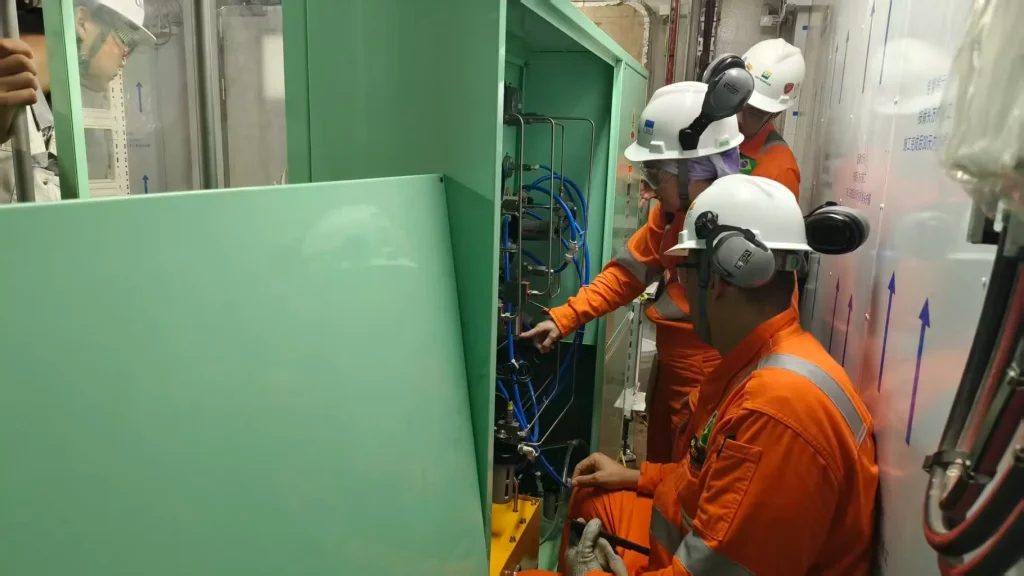
How Should Buyers Select Safety Valve Testing Equipment?
A buyer should not select a safety valve test bench only by comparing maximum pressure or equipment price.
Before requesting a proposal, the buyer should confirm:
- Applicable safety valve types
- Direct-loaded or pilot-operated design
- Minimum and maximum valve size
- Flange or threaded connection
- Maximum set pressure
- وسيط الاختبار
- Required accuracy
- Expected testing frequency
- Manual or automatic operation
- Data-recording requirements
- Available compressed-air supply
- Installation space
- Workshop environmental conditions
- Applicable testing procedure
- Required fixtures and adapters
A suitable safety valve test bench manufacturer should evaluate these factors before recommending a model.
Highlight provides manual, PLC-controlled, computer-controlled, portable, online, containerized, and project-based safety valve calibration solutions. Customers can also review the company’s detailed safety valve test bench selection guide.
Why Is Customization Important for Shipyard Projects?
Standard equipment can satisfy many routine testing requirements, but shipyard projects may involve specific constraints.
These can include:
- Restricted workshop space
- Existing compressed-air conditions
- Different valve connection standards
- Multiple valve sizes
- Marine maintenance procedures
- Required control-panel layout
- Customer-preferred instruments
- Special documentation
- Local operating habits
- On-site installation limitations
Through its custom pressure testing equipment service, Highlight can evaluate pressure range, flow requirements, test medium, fixture arrangement, control system, port design, installation space, and project-specific functions.
Customization should not mean adding unnecessary complexity. The objective is to provide the functions the operator needs while keeping operation, maintenance, and future support manageable.
What Happens After Equipment Acceptance?
Acceptance marks the completion of an important project stage, but it is not the end of equipment support.
After the safety valve calibration bench enters operation, the customer may require assistance with:
- Operating questions
- Fixture use
- Instrument verification
- Working-medium changes
- Pressure-range adjustments
- Troubleshooting
- Replacement parts
- Preventive maintenance
- Operator retraining
- Control-system support
تسليط الضوء على الدعم الفني covers equipment selection, installation guidance, troubleshooting, training, maintenance, and engineering assistance for pressure testing and boosting systems.
The company’s wider industrial equipment service process also includes technical evaluation, project documentation, production support, delivery coordination, installation guidance, and project-dependent field service.
Highlight Continues Supporting Industrial Valve Testing Projects
Highlight will continue developing and supplying safety valve testing equipment, general valve test benches, pressure testing equipment, gas boosting systems, liquid pressure systems, and customized high-pressure testing solutions.
Customers planning a new offline safety valve calibration bench should provide the valve type, valve size, connection method, set-pressure range, test medium, required automation level, testing frequency, applicable procedures, and installation environment.
This information allows the engineering team to evaluate whether a manual control system, computer-controlled bench, portable tester, online calibration system, or customized solution is more suitable.
أبرز بيانات الاتصال to request a technical proposal, safety valve test bench quotation, model recommendation, or customized PSV calibration solution.
 English
 Français
 Русский
 Español
 Português
 العربية
 Tiếng Việt
 한국어
 Bahasa Indonesia
 Deutsch
 Türkçe
 Italiano